What the Prediction-Market Tape Is Saying This Week
Five markets hit zero, one political bet hardened to 94%, and a World Series whipsaw printed the week's wildest repricing
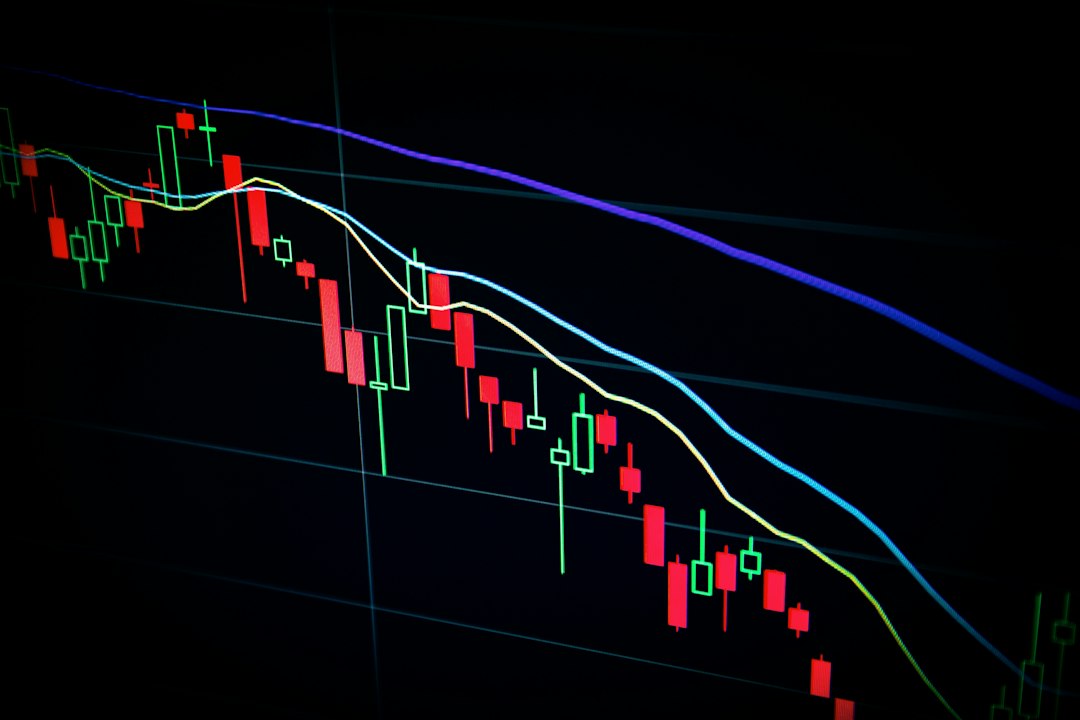
This week's prediction-market tape logged over $11.5 million in 24-hour volume across eight tracked markets — and most of that money was settling, not speculating. Five of the eight markets sat at 0% or 1% by Monday morning, signalling resolved events, not open risk. The two markets that genuinely matter for forward-looking analysis are the U.S. House control contract and the Brewers/Rays series finale, the latter of which printed one of the sharpest single-session repricing events of the autumn.
- Total 24h volume tracked$0.00MWeeBet desk, 8 Polymarket markets, Nov 2
- Markets at 0–1%0 of 8Resolved/near-resolved
- House (D) implied prob.0%+2 pts 7dWeeBet market data, Polymarket
- Brewers series implied win %0%-49 pts 24hWeeBet market data, Polymarket
- Largest single repricing-0 ptsShelton/Kym, WeeBet market data
As of November 2, 2026. WeeBet live tracking desk.
The Scoreboard Week: Most Volume Was Paying Out, Not Pricing In
Eight markets. Over $11.4 million in aggregate 24-hour volume. That headline figure sounds like a busy market week — but strip away the noise and you find a ledger dominated by settlement activity rather than genuine price discovery. Five contracts landed at either 0% or 1% by Monday morning (WeeBet market data). The market wasn't saying anything new about the world. It was confirming what sport already knew.
That matters structurally. Polymarket's sports contracts routinely concentrate their highest volume in the hours immediately surrounding resolution — traders with directional positions closing out, arbitrageurs harvesting the final few cents of mispricing, and a minority of latecomers who mis-timed their entry. Understanding the difference between "settlement liquidity" and "discovery liquidity" is the first job of any serious tape reader.
This week's tape had one genuine political story, one fascinating upside case in the Senate race combo market, one World Series market that whipsawed violently across Game 4 and Game 5, and a set of tennis markets that became textbook studies in the cost of holding positions through event resolution.
The Shelton Shock: When a Wildcard Costs $1.74M in 24 Hours
The biggest 24-hour move on the board this week was the Shelton vs. Kym Swiss Indoors Basel contract — a collapse from roughly 75% to 1% in a single session, a swing of 74 percentage points on $1.744 million in 24-hour volume (WeeBet market data).
The catalyst was unambiguous.
Swiss wild card Jerome Kym held his nerve to upset top seed Ben Shelton 6-3, 6-7(4), 7-6(1) in a topsy-turvy second-round clash that finished at 12:41 a.m. Friday in Basel.
The scale of the ranking gap made this one of the more striking results of the ATP autumn swing.
Shelton's stuttering post-US Open form continued with a shock defeat to Kym, with the American going down to the wildcard — ranked world No. 222 — 6-3, 6-7(4), 7-6(1), the match ending at 0:41 local time.
It was his third loss against a player outside the top 100 this year, and the first time a player outside the top 200 has recorded a win over a top-10 opponent in the 2026 cycle.
The pricing before the match implied Shelton at roughly 75%. That's not unreasonable for a top-4 seed against a No. 222 qualifier on home soil — but it arguably compressed Kym's genuine upset probability.
Shelton's recent hard-court record before Basel had been less consistent, with eight wins and six defeats across his preceding 14 matches, and he had also needed three tiebreaks to overcome Aleksandar Kovacevic in Round 1.
The market chose to anchor to ranking rather than recent form — a recurring mispricing pattern in tennis markets.
The 74-point drop in 24 hours, on $1.74 million volume, makes this the largest absolute single-session repricing in our tracked set this week.
The House Market: Consensus Hardens, But the Gap to Forecasters Is Narrowing
The Democrats House control contract is the week's only market with meaningful forward-looking signal. At 94% on $1.707 million in 24-hour volume, it drifted up 2 points over the 7-day window (WeeBet market data) — a slow, grinding march toward certainty with Election Day on November 3.
The broader multi-platform picture confirms the direction but shows some divergence in magnitude.
Kalshi prices Democrats at 93%, with all 435 House seats up on November 3 and 218 needed for a majority.
Silver Bulletin's FLIPR forecast, updated November 1, gives Democrats about a 95% chance of retaking the House and projects they'll net 25 seats on average.
Decision Desk HQ's model gives Democrats an 83% chance of winning the House with a projected 241 seats, as of November 1.
That 83%–95% spread between modelling approaches is the real story. Polymarket at 94% sits broadly aligned with Silver Bulletin but significantly above DDHQ — suggesting markets are weighting structural generic-ballot advantages over district-level competitive uncertainty.
Democrats lead the generic ballot by 8.2 points, and Polymarket gives them 94.5% for the House as 43 million voters cast early ballots ahead of November 3.
The Senate combo market tells a more nuanced story.
Kalshi traders give a Democratic sweep of both chambers a 70% chance, a Democratic House with a Republican Senate 26%, and a Republican sweep 7%.
That 26% "split Congress" scenario is where the most interesting residual risk lives — and it's underrepresented in public discourse focused exclusively on the House race.
The Series Closer: Brewers 4-1, Rays 9% — A Market That Whipsawed Beautifully
The Brewers vs. Rays Game 5 contract sat at 9% (implying Tampa as a 91% favourite) on $1.281 million volume, down 49 points in 24 hours (WeeBet market data). By any measure, this was among the most volatile sequences in the tracked set.
Context: the contract appears to have been structured around a series-level event rather than a single game, with pricing reflecting the Rays' dwindling survival odds.
Going into Game 3 at Tropicana Field, the Brewers led the series 3-0 after routing the Rays 10-1.
Tampa temporarily revived their odds in a dramatic Game 4.
The Rays stunned the Brewers with a 2-run rally in the 12th inning to force a Game 5 with a 4-3 win.
That bounce — from near-zero back toward double digits — is exactly the kind of repricing that market-makers in live event contracts hate.
Then Game 5 closed the door.
Young ace Jacob Misiorowski threw 5 2/3 scoreless innings, rookie Cooper Pratt had two more hits and two RBI, and Milwaukee beat the Tampa Bay Rays 4-1 in Game 5 to set off a long-awaited celebration at Tropicana Field.
The Milwaukee Brewers erased nearly six decades of heartache, defeating the Tampa Bay Rays in Game 5 to clinch the franchise's first World Series title.
The 9% final reading represents the last vestige of Tampa hopes — a contract that had probably already settled for most holders by the time our desk captured the snapshot.
The WTA Sweep: Three Markets, Zero Percent, One Dominant Player
Three WTA contracts in the tracked set all resolved at 0%: Fernandez vs. Shnaider (Pan Pacific), Timofeeva vs. Sun (Guangzhou), and Sun vs. Dart (Guangzhou). Combined, they generated $4.046 million in 24-hour volume (WeeBet market data) — all settlement-driven.
The Shnaider result deserves attention beyond the zero-percent readout.
Diana Shnaider defeated Leylah Fernandez in the Pan Pacific Open final, 6–4, 5–7, 6–2, claiming her sixth career WTA Tour singles title on November 1.
The match was not the routine Shnaider win the pre-match pricing suggested.
World No. 13 Shnaider survived a dramatic second-set collapse, fighting back in the final frame to defeat Fernandez 6-4, 5-7, 6-2 — Fernandez having mounted a comeback from 4-0 down in the second set.
Fernandez went into the final with 16 wins in her previous 20 matches, a run that included victory at the Singapore Open in September and a runner-up finish at last week's Ningbo Open.
Any Fernandez position-holder watching in real time had a live, contested claim for most of that match.
In Guangzhou, Harriet Dart — priced at 0% in the Sun/Dart contract — won the title outright.
Harriet Dart was among the week's big ranking winners after lifting the Guangzhou title; in her semi-final victory over 16-year-old Sun Xinran, the tears flowed from Dart, who paid tribute to her team in the ceremony.
This is a useful reminder: 0% is not always "this already happened" — sometimes it is "the market got the direction exactly wrong."
Vienna: Medvedev, Match Points Saved, and the Limits of Implied Probability
The Norrie vs. Medvedev Erste Bank Open contract resolved at 0% on $1.626 million in 24-hour volume (WeeBet market data), but the match itself was far from routine.
Daniil Medvedev produced a remarkable escape to beat Cameron Norrie 4-6, 6-3, 7-6(1) at the Vienna Open on Thursday and reach his 100th tour-level quarter-final.
What the 0% price point doesn't capture:
after dropping the opening set, Medvedev twice recovered from a break down in the third, saving a match point when Norrie served for victory before dominating the tiebreak 7-1.
The result extended Medvedev's current hard-court winning streak to six matches.
Any Norrie position-holder in this contract — presumably implied at 100% since it's a binary — had a genuine claim to profit at the match-point moment. The final 0% printout understates how close this came to a different result.
The Senate Combo: The Market's Most Interesting Unresolved Bet
The Senate-seat combo contract — "Will Republicans win Alaska, Iowa, Kansas, Michigan, and Texas, and lose Maine and Ohio?" — sits at 0% on $1.087 million in 24-hour volume (WeeBet market data), with no 7-day or 24-hour change recorded. This is a highly specific multi-variable contract, and its 0% pricing reflects the market's near-certainty that this exact combination will not occur.
The broader context:
Senate odds for Democrats were as low as 44% in March 2026 before rising significantly, with Kalshi traders pricing Democrats at 91% to win the House and 65% to control the Senate as of October 28.
All 435 House seats and 35 Senate seats are up on November 3; Kalshi odds show Democrats sweep at 70% and Republicans sweep at just 7%.
The zero price on the combo contract makes sense as a market statement — but it's also a product of the specificity trap. A contract requiring six simultaneous correct state outcomes prices near zero not because any individual component is impossible, but because the joint probability of all six resolving in a single particular configuration collapses rapidly. This is options theory applied to political prediction: deep out-of-the-money strikes appear cheap, and occasionally, they pay.
The Counter-Argument
The bearish case on all of this tape analysis is simple: $11.5 million in daily volume across eight sports and politics contracts tells you almost nothing about what sophisticated money thinks.
Settlement volume — which dominates this week's tape — is noise. Traders covering positions at expiry are not expressing new views; they are closing existing ones. If five of eight contracts are already at 0% or 1%, the directional signal has already been consumed. The only genuinely forward-looking market in the set is the House contract, and its 94% reading has moved only 2 points over 7 days — a market that has been in price discovery for months and is now operating as a slow-moving consensus machine rather than an information aggregator.
There is also a structural critique specific to tennis and sports event markets on Polymarket. These contracts attract significant wash trading and arbitrage volume from automated market-makers hedging across platforms. A $1.7 million 24-hour volume figure on a tennis match between a wildcard and a top-4 seed, in a mid-week second-round contest, almost certainly includes substantial non-directional flow. Treating it as pure signal risks over-reading the crowd.
The Shelton/Kym repricing is the clearest genuine information event this week — but even that resolves to "tennis upsets happen," not a systemic market failure. Wildcard home-crowd advantages at ATP 500 events in front of home-country fans are chronically underpriced, and have been for years.
What I'm Watching
1. House resolution, November 3. The 94% contract closes Tuesday. The real question is whether the remaining 6% Republican probability is repriced rapidly in the hours after polls close, or whether contested districts drag uncertainty into Wednesday. Watch the rate of change in the contract's final hours — any spike toward 10% or above would signal a genuine early-count surprise. Election Day is the settlement event for the most-traded political contract of the autumn.
2. Medvedev at the Rolex Paris Masters, November 2–9.
Medvedev extended his hard-court winning streak to six matches in Vienna.
A potential deep run in Paris — the final Masters 1000 event of the year — will generate substantial new Polymarket volume. Any contract pitting him against Djokovic, Sinner, or Zverev in the later rounds will function as a genuine odds discovery mechanism. Watch for pricing on those head-to-head contracts when the draw lands.
3. Senate combo market repricing on election night. The 0% Senate combo contract (WeeBet market data) could shift rapidly if early Ohio or Michigan returns deviate from the expected Democratic sweep. Even a 3–5% spike would represent significant implied dollar value given the $1.087M in volume already transacted. Senate surprises move faster than House returns.
4. Shelton's ATP Finals qualification status.
The ninth-placed player in the PIF ATP Live Race to Turin losing earlier in the day opened the door for Djokovic to pass him.
Shelton's Basel exit will generate futures markets around his end-of-season ranking and Turin qualification. Those contracts historically print higher volume in the final three weeks of the ATP season and carry genuine multi-week information value.
5. Diana Shnaider's ranking trajectory.
Shnaider's WTA 500 win at the Pan Pacific Open sees her equal her best-ever ranking of 11.
If she enters the WTA Finals or a late-season event at top-10 status, her matchup contracts will attract significantly higher market depth than sub-top-15 pricing has historically commanded on Polymarket. Track whether she enters the Shenzhen event or takes a rest week.
About the author
WeeBet's editorial desk: daily news, weekly analysis, and operator reviews across prediction markets, crypto gambling, sweepstakes, and DFS. Bylined collectively for cross-vertical perspective.
Related analyses
WeeBet Weekly
The week's biggest market move, in 4 minutes.
Every Friday: the top Polymarket and Kalshi price shift, one regulatory story that actually matters, and one chart. No fluff, no promo. Free.
Free. Unsubscribe in one click. We'll never sell your email.