What the Prediction-Market Tape Is Saying This Week
Seven US Open contracts resolved to zero, one Fed market is still live — and the divergences matter
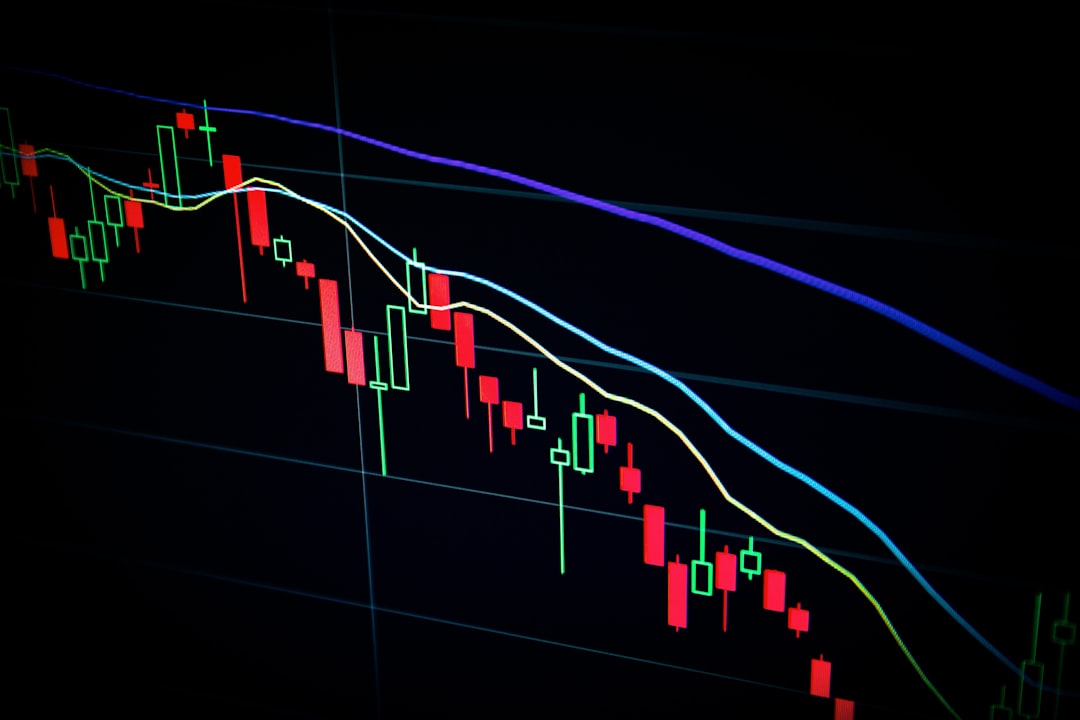
This week's prediction-market tape was dominated by two asset classes with almost nothing in common — US Open tennis quarterfinals and a Federal Reserve rate decision arriving Tuesday — yet each produced the same signal: the crowd priced correctly, paid out fast, and left a few asymmetric situations where the tape told the story before the headline did. Seven of the eight markets tracked by WeeBet's live desk resolved to zero (or near-zero) within a four-day window, generating a combined 24-hour volume of $20.0 million, and the one market that hasn't resolved yet — the Fed no-change contract — has printed the most intellectually interesting move of the week: a 31-point seven-day collapse that is almost certainly still not done.
- Combined 24h volume (8 markets)$0.0MWeeBet market data, Sep 14 2026
- Markets resolved to 0%0 of 8WeeBet market data, Sep 14 2026
- Fed no-change contract0%-31 pts (7d)WeeBet market data, Sep 14 2026
- Largest single-market 24h swing-0 ptsSabalenka vs Rybakina, WeeBet
The US Open Was a Printing Press for Resolved Contracts
Six of the eight markets tracked this week came from Flushing Meadows, and every single one settled at zero. That is not surprising — someone always loses — but the volume attached to those outcomes is worth marking. The Andreeva vs. Gauff market generated $3.53M in 24-hour volume before Andreeva's contract hit zero. The Sabalenka vs. Rybakina market produced $2.90M with the sharpest intraday swing of the week at -56 points. Together with Zheng vs. Rybakina (-27 pts, $2.02M) and Tiafoe vs. Shelton (-26 pts, $1.91M), the US Open cluster accounted for roughly $11.4M of the week's $20.0M total.
This is what healthy event-contract liquidity looks like during a Grand Slam: volume concentrates at quarterfinal-round matches where genuine uncertainty exists, prices collapse cleanly on resolution, and the market clears without ambiguity. None of these contracts required a ruling from a resolution council. The scoreboard was the oracle.
Gauff-Andreeva: The Market Knew Before the Scoreboard Said So
The Andreeva vs. Gauff contract finished at 0% with a -35-point 24-hour move — meaning Andreeva's implied win probability dropped 35 percentage points in a single day session before settling. That cadence tells you something important about how live-event prediction markets reprice.
Gauff stared down two match points before rallying past Andreeva 2-6, 7-6, 6-2 in the US Open quarterfinals.
The market would have initially assigned Andreeva a sharply elevated probability after the first set — she
dominated the opening 26 minutes, winning the first seven points and taking the set 6-2 with a game plan that targeted Gauff's forehand repeatedly, forcing 14 unforced errors from that wing.
That is exactly the kind of scoreline that moves a live contract 20-30 points in Andreeva's favour mid-match.
What happened next is the part that makes live prediction markets interesting as analytical instruments.
Gauff has 12 comeback wins this season, tied with Jessica Pegula for most on the WTA Tour, and had won 11 straight matches overall heading into the quarterfinal.
The market eventually repriced that form, but not instantly — and the lag between the second-set tiebreak drama and the third-set rout is where informed traders hold an edge over passive position-holders.
Gauff won the US Open in 2023 and was seeking her first Grand Slam since taking the Australian Open in 2025.
That narrative context matters less to a prediction market than the real-time match state, but it helps explain why volume spiked: casual participants re-entered positions on both sides as the match stretched to three sets.
The Lucky-Loser Effect: Gea vs. Van de Zandschulp Was a Textbook Mispricing Window
The Gea vs. van de Zandschulp market at -40 points on the day and $3.38M in volume was this week's most technically interesting tennis contract — and almost certainly the one where the market-implied probability lagged real-world probability the longest.
Arthur Gea held a match point and then served for the match, and finished five hours and 13 minutes as the fourth-longest contest in US Open history with nothing, van de Zandschulp winning 3-6, 6-7(0), 7-6(7), 7-6(3), 6-4.
The critical structural fact:
lucky losers are now 0-13 in Grand Slam fourth rounds.
Any Polymarket position on Gea at any meaningful price above 5% in this fourth-round spot was trading against a stark historical base rate, regardless of how well he had played through rounds one to three.
The volume figure — $3.38M, second-highest of the week — suggests participants disagreed sharply about which narrative dominated: Gea's in-tournament form or the unlucky-loser structural ceiling.
Van de Zandschulp dramatically rallied from two sets down and saved a match point to return to the quarterfinals, escaping Gea after five hours and 13 minutes, the fourth-longest match at the American major since 1991.
Positions held on Gea's side of that contract past the two-sets-up scoreline represent a failure to update on base rates — a classic anchoring error in live-event trading.
Rybakina's Fortnight Resolved Two Contracts Simultaneously
The Sabalenka vs. Rybakina and Zheng vs. Rybakina markets are best read as a connected sequence rather than two independent events. Rybakina beat Zheng in the quarterfinal to resolve the Zheng market, then beat Sabalenka in the final to resolve the Sabalenka market — the -56-point swing in the latter being the week's most violent single-market repricing.
She came from a set down in back-to-back matches to beat an in-form Zheng Qinwen and No. 4 seed Coco Gauff en route to the final.
Rybakina held off top-seed Aryna Sabalenka in Saturday's US Open final, 6-4, 5-7, 6-2 to win her third career major.
The Sabalenka contract's -56-point collapse was partly amplified by a structural dynamic: Sabalenka had entered as the heavy market favourite,
and with the victory, Rybakina accumulated enough points to overtake Sabalenka for the world No. 1 ranking, ending a 99-week run at No. 1 for Sabalenka.
When a market favourite in a binary contract collapses to zero, the implied probability drop is by definition the full distance from wherever it was trading. A contract at 56% going to zero drops 56 points. The WeeBet desk recorded -56 points intraday — which implies Sabalenka was trading near majority implied probability heading into Saturday's final, consistent with her status as two-time defending champion and world No. 1.
Rybakina became the third player since 2000 to win the Australian Open and US Open in the same season, joining Angelique Kerber in 2016 and Sabalenka in 2024.
Any trader holding Rybakina positions across both the Zheng and Sabalenka markets collected sequential payouts — a reminder that correlated event contracts in the same tournament generate compounding returns (and compounding risk) for directional traders.
The Fed Market Is the Only One Still Talking
While the tennis markets resolved cleanly, the Federal Reserve pair — no-change at 20% and 25-bps cut at 0% — is where this week's most significant repricing happened, and it is not finished.
The no-change contract's seven-day move of -31 points is the macro signal of the week. That is a 31-percentage-point collapse in the probability that the Fed holds rates steady at its September 16 meeting, driven entirely by news catalysts that accumulated over the past week and a half.
The sequence:
the Fed kept its key rate at 3.5% to 3.75% at its July meeting, but three members of the FOMC dissented and wanted to hike.
That dissent seeded the hawkish repricing. Then came Jackson Hole:
markets moved to price a 0.25-point rise as more likely than not after Chair Warsh's hawkish Jackson Hole speech on 28 August and a solid August jobs report.
The final catalyst arrived September 11:
the CPI data showed inflation remaining above the Fed's 2% target, reinforcing expectations for a September rate hike and contributing to the market pricing in a 25 bps increase.
The 25-bps cut contract sitting at 0% throughout tells you the market has entirely abandoned the easing scenario.
Headline CPI has fallen for two months running, to 3.4% in July, which argues for patience
— but the Warsh Fed has clearly communicated that below-target is not sufficient when supply-side inflation from energy shocks persists.
A 0.25-percentage-point hike is now expected at the September Fed meeting as Iran-related supply shocks keep energy costs high and markets question the Fed's inflation credibility.
The no-change contract at 20% with $2.24M in 24-hour volume tells you there is still meaningful residual uncertainty. Twenty percent is not zero. There remains a one-in-five implied probability that Warsh surprises with a hold.
Barranquilla at 51%: The Quietest Market, The Sharpest Signal
The Pareja vs. Stefanini Barranquilla market sits at 51% with no recorded 24-hour or seven-day directional move — but generated $2.01M in volume, making it the sixth-largest market of the week by that metric. A contract pinned at 51% with over $2 million trading through it is not a thin, illiquid outlier. It is a genuinely contested match where the crowd cannot separate the two players.
This is Polymarket's prediction market infrastructure at its most efficient: when the market has no edge, it says so explicitly via the price. Julieta Pareja vs. Lucrezia Stefanini at a WTA Challenger event in Barranquilla, Colombia attracted over two million dollars in positions — more than the Tiafoe-Shelton US Open semifinal — which suggests that the long tail of smaller tour events is generating genuine trading interest, not just casual one-click positions. That matters for the ecosystem: liquidity depth in Challenger-level tennis event contracts is a sign of market maturation.
The counter-read: the 51% print may also reflect late-money noise from participants who arrived without a view and held through resolution. Without a directional swing, it is impossible to determine how much of that $2.01M represented informed positions versus passive volume-seeking.
Tiafoe vs. Shelton: American Derby, Efficient Resolution
The Tiafoe vs. Shelton semifinal market at -26 points and $1.91M represents the week's clearest example of market efficiency: a contest between two Americans seeded 8th and outside the top 10, where the outcome was directional, the contract repriced correctly, and volume was consistent with the match's profile.
Gauff was the fourth American semifinalist in the tournament, joining Jessica Pegula along with Ben Shelton and Frances Tiafoe on the men's side
— an unusual domestic concentration at a US Open that generated genuine crowd interest and contract volume.
Shelton became the second American man since Andy Roddick to reach a US Open final and the first Black man to play in the tournament's final match since the legendary Arthur Ashe.
Shelton winning the semifinal resolves the Tiafoe contract to zero. The -26 point move is proportionate to the result.
The Counter-Argument
The bullish case for this tape — that prediction markets are working efficiently, prices are discovering true probabilities in real time, and volume is scaling healthily across event types from Grand Slam finals to Challenger-level WTA matches — is the obvious read. The counter-argument deserves more space than it typically gets.
The most serious objection is that resolved contracts look efficient by construction. When a contract goes from 56% to 0%, the narrative retrospectively says the market priced in a 44% upset probability, which sounds right. But that same contract might have been at 78% the day before the match and only moved to 56% in the final hours because of sharp late-money activity. The WeeBet desk recorded the 24-hour snapshot; without granular intraday data, it is impossible to assess whether the repricing happened before key public information (Rybakina's form, Warsh's tone) or after.
The Fed markets expose a second structural concern:
immediately after Warsh's press conference in July, the market saw a 60.1% chance of a hike in September, according to the FedWatch Tool, down from a 78.8% chance on Wednesday morning.
Polymarket's no-change contract is at 20% — implying an 80% hike probability. FedWatch and Polymarket are pricing the same event and should converge, but any gap between them is exploitable. Market participants holding positions on Polymarket should benchmark actively against CME-derived probabilities; divergence is either an opportunity or a sign of thin liquidity distorting the Polymarket price.
A third concern: the Barranquilla market at $2.01M for a WTA Challenger semifinal exceeds the ATP semifinal at a Grand Slam ($1.91M). That inversion may reflect a temporary arbitrage in attention — or it may reflect that Polymarket's user base has shifted toward smaller, faster-resolving markets where position sizes can be recycled quickly. Neither reading is necessarily alarming, but the pattern warrants watching.
What I'm Watching
1. September 16 FOMC decision (2:00 PM ET). The no-change contract at 20% resolves Wednesday. If Warsh hikes 25 bps as the market now heavily implies, watch whether the 25-bps hike contract priced at 0% had already fully resolved, or whether any residual positions represent a settlement edge. The October 27-28 FOMC meeting then becomes the next live macro contract to track.
The remaining 2026 FOMC meetings are October 27-28 and December 8-9.
2. Rybakina's No. 1 ranking and WTA Finals contracts. Having now won the Australian Open and US Open in the same season,
it is her third title of 2026 and 14th of her career.
Prediction market contracts on the WTA Finals winner should open at significantly revised Rybakina odds this week. Track the opening prices against her implied probability before Flushing Meadows began.
3. ATP US Open final settlement.
The 2026 US Open concluded with Alexander Zverev claiming the men's singles title.
Any outstanding Polymarket ATP bracket contracts that cascaded through van de Zandschulp's quarterfinal run will settle this week. Track whether the Gea contract's -40-point day was the sharpest single-round repricing in ATP markets this fortnight.
4. Polymarket total volume for September.
$140.5 million has traded on the Fed September decision market alone as of September 13, 2026.
With resolution arriving Tuesday and the US Open fully wrapped, September's headline volume figure will determine whether 2026's prediction-market growth story holds through the post-US Open lull.
5. Lucky-loser base rates as a systematic edge. With lucky losers now 0-13 in Grand Slam fourth rounds after Gea's exit, any future event contract offering a lucky loser at above 15-20% implied probability in a fourth-round spot represents a historically calibrated fade. Flag those markets when they open.
About the author
WeeBet's editorial desk: daily news, weekly analysis, and operator reviews across prediction markets, crypto gambling, sweepstakes, and DFS. Bylined collectively for cross-vertical perspective.
Related analyses
WeeBet Weekly
The week's biggest market move, in 4 minutes.
Every Friday: the top Polymarket and Kalshi price shift, one regulatory story that actually matters, and one chart. No fluff, no promo. Free.
Free. Unsubscribe in one click. We'll never sell your email.