The Grey Market Closes: Sportsbook Regulation Week
Nebraska, Pennsylvania, and New Zealand signal the end of regulatory optionality — and what comes next
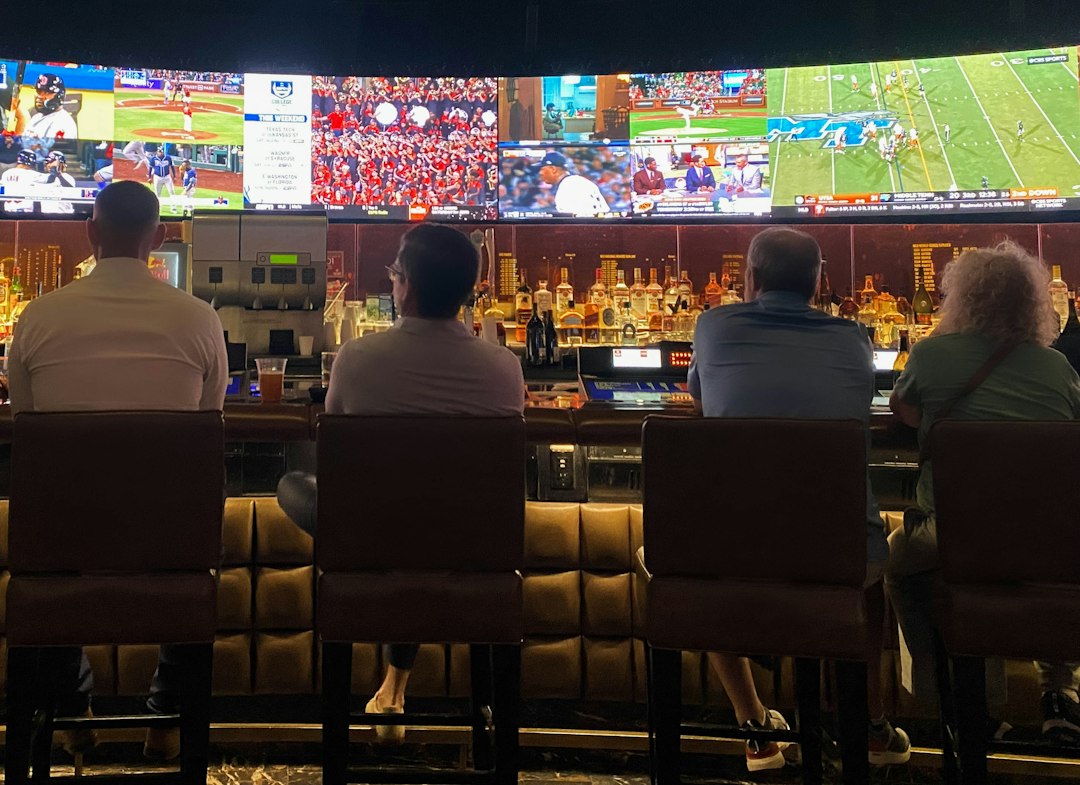
This week's sportsbook regulation news tells a single coherent story: the era of regulatory optionality is closing, and every jurisdiction — from a Cornhusker ballot box to a Wellington government department — is being forced to make an explicit choice about which operators belong inside the tent and which do not. Nebraska's November 3 vote, Pennsylvania's HB 2801 racing against a November 30 session deadline, and New Zealand's 11-operator Stage Two shortlist are three simultaneous expressions of the same global shift: governments are done tolerating grey markets, and the industry has roughly 90 days to position itself on the right side of that line.
- NE ballot campaign raised$0.00MTax Relief Nebraska, Oct 2026
- NZ licence auction priceNZ$0MPer application right, Sep 2026
- US states banning sweepstakes0+Statutory bans enacted by Oct 2026
- PA licensed iGaming market$0.0BAnnual revenue, PGCB 2025
- NZ operators shortlisted0DIA Stage Two, Oct 2026
The Thread Connecting Three Very Different Markets
Nebraska is a landlocked state where sports betting still requires a drive to a casino floor. New Zealand is a Pacific island nation that just completed a 10-round auction for the right to apply for online casino licences. Pennsylvania is a fully mature, $2.2 billion iGaming market trying to define its perimeter. These three jurisdictions share no geography, no language of governance, and no comparable market size — yet this week they each moved in the same direction. The regulatory frontier is hardening everywhere, simultaneously.
That convergence is not coincidental. Post-pandemic tax shortfalls, the political mainstreaming of sports betting as a revenue tool, and the explosive growth of unregulated sweepstakes platforms have combined to give legislators a clear political narrative: capture revenue that is currently leaking to offshore or unregulated operators, and use it for something voters can feel. Property tax relief. Consumer protection. Tax fairness. The specific mechanism varies; the motive does not.
Nebraska: When the Product Has to Sell Itself Through Someone Else's Priority
The campaign to legalise online Nebraska sports betting heads into the final three weeks before the November 3 election having raised $14.65 million, with FanDuel and DraftKings each recently adding more than $3.5 million to its coffers.
That is a significant spend for a state with a relatively small addressable market, and it signals how important a domino Nebraska has become for the operators funding the effort.
The strategic insight behind the campaign design is worth examining closely.
The committee behind the effort, Tax Relief Nebraska, works to convince voters that online betting is a good vehicle for property tax relief — lawmakers were not convinced over multiple sessions, so Tax Relief Nebraska turned in more than 350,000 petition signatures to qualify the measure for the November ballot.
That bypass manoeuvre — going directly to voters after the legislature stonewalled — is increasingly the operator playbook in states where a single chamber or governor can block progress indefinitely.
The measure requires that 70% of all wagering tax revenue goes directly to Nebraska's Property Tax Credit Cash Fund — more than $166 million in projected property tax relief over the first ten years.
But opponents have a credible counter:
a study performed for supporters estimated online sports betting would generate $17 million per year for property tax relief — $85 million over the first five years — which would represent about 3% of the $5.59 billion paid in property tax in Nebraska in 2025.
The gap between the campaign's $166 million headline and the $17 million-per-year supporter study is arithmetically consistent but politically inconvenient: it exposes just how modest the property tax impact actually is relative to the state's burden.
The state would tax sports betting under the 20% rate set for casino gambling,
and
each of the state's five racetrack casinos could offer betting through no more than two online platforms.
That structure — tethered licences, limited skins, high tax rate — is designed to win a popular vote, not to build the most competitive market. If Initiative 440 and 441 pass, whoever wins those racetrack skin slots (almost certainly FanDuel and DraftKings, given who funded the campaign) inherits a structurally sheltered market. That is the real prize.
Pennsylvania: The Sweepstakes Endgame, Compressed Into Six Weeks
Pennsylvania's HB 2801 story is less about whether sweepstakes casinos survive in the state — they effectively already don't — and more about whether the legislature can codify that reality into statute before the session clock runs out.
In April 2025, Pennsylvania's PGCB made its position clear when 18 cease-and-desist letters went out, and every affected operator backed off.
Pennsylvania's licensed online casino market brought in $2.2 billion, and the state treats that as the legitimate channel; the regulator called sweepstakes platforms "illegal online gambling" in a 2025 hearing.
HB 2801 is therefore less a policy pivot than a legislative mopping-up operation.
House Bill 2801 was pre-filed by Rep. Russ Diamond and co-sponsors in late September and has been referred to the House Gaming Oversight Committee — for which Diamond is the co-chair — in preparation for the 2027 session beginning January 5.
The complication:
Pennsylvania's current session runs through November 30, and bills will not carry over to 2027.
That is a 47-day window for a bill that touches skill games, sweepstakes, fantasy contests, online gaming, sports wagering, video gaming terminals, and tax distribution simultaneously. The odds of it crossing the finish line in this session are not favourable.
The bill proposes fines ranging from $50,000 to $500,000 per violation, could lead to gaming-licence revocations, and would give the Pennsylvania Gaming Control Board and the state attorney general enforcement powers.
The fine architecture matters: at $500,000 per violation, any operator that continues serving Pennsylvania players after enactment faces existential financial exposure. The deterrent effect would be immediate.
The wider context:
nine states now ban sweepstakes casinos by statute — California, Connecticut, Indiana, Louisiana, Maine, Montana, New Jersey, New York, and Tennessee — with Oklahoma's ban starting November 1, 2026.
Pennsylvania joining that list would not be a surprise; it would be the logical conclusion of a two-year regulatory campaign that began with cease-and-desist letters and is ending with felony-grade penalty structures in other states.
Sweepstakes Ban Status: Key Jurisdictions, Oct 2026
| Jurisdiction | Status | Mechanism | Max Penalty |
|---|---|---|---|
| Indiana | Banned | HB 1052 (eff. Jul 1, 2026) | $100,000/violation |
| Maine | Banned | LD 2007 (eff. Jul 14, 2026) | $100,000/violation |
| Louisiana | Banned | HB 53 / HB 883 (eff. Aug 1, 2026) | $1M + racketeering |
| Tennessee | Banned | HB 2136 (signed May 2026) | Statutory |
| Oklahoma | Imminent | SB 1589 (eff. Nov 1, 2026) | TBD |
| Pennsylvania | Pending | HB 2801 (session ends Nov 30) | $500,000/violation |
| Wyoming | Draft only | 27LSO-0098 (Management Council) | TBD |
Sources: state legislatures, gambling.com, casino.com, Oct 2026
New Zealand: What a Clean-Sheet Regulation Actually Looks Like
New Zealand's story this week is the most structurally significant of the three, because it shows what happens when a government designs a regulatory market from scratch rather than retrofitting rules onto an existing grey one.
On May 1, 2026, the Online Casino Gambling Act 2026 came into force, replacing the offshore grey market with a regulated domestic system; the Department of Internal Affairs will issue up to 15 licences via competitive auction, with the newly regulated market officially opening on December 1, 2026.
All successful candidates underwent a rigorous 10-round auction process with a total of 32 bidders, with the price for an individual licence set at NZ$15 million (approximately £6.4 million).
The operator shortlist reads like a who's who of the global mid-market:
Betway (through Super Group subsidiary Baytree Interactive) took the maximum three application rights; Entain holds two via Playvia Gaming, SkyCity Entertainment Group two, and Rock Swift Group two; Stake New Zealand Limited secured one application right, with TAB New Zealand, Skill On Net, One Casino, Christchurch Online and Rush Entertainment also among the successful applicants.
The Entain position is particularly strategic.
With its exclusive betting brand TAB in New Zealand, Entain is the only online operator that could cross-sell between sports and iGaming.
That structural advantage — a monopoly on the sports side plus a competitive slot on the casino side — compounds meaningfully if TAB's existing customer base converts at even a modest rate.
From December 1, providers that have not applied for a licence must cease operating in New Zealand; providers with an application under consideration may continue to operate without advertising until a decision is made.
That advertising restriction during the interim is not trivial: it means the 11 shortlisted operators will be effectively dark on acquisition during precisely the period when they want to prime brand awareness ahead of the full launch.
Sports betting sits outside the process entirely, remaining under Entain's exclusive operation of TAB New Zealand; these licences cover online casino gambling only.
That clean separation — casino market open, sports market monopoly — reflects a deliberate policy preference for limiting market fragmentation in wagering, while using competition to improve the casino product.
The Fiscal Alchemy Problem
All three stories this week involve governments using gambling revenue as a solution to a pre-existing fiscal problem. Nebraska wants it for property tax relief. Pennsylvania protects its $2.2 billion market in part because it generates meaningful tax revenue the state depends on. New Zealand's minister framed the regime explicitly as
"closing the gambling tax loophole and requiring licensed online casino operators to pay tax, just like any other business operating in New Zealand."
This is regulatory motivation worth taking seriously, because it shapes the design of the rules. When a government needs gambling revenue, it has incentives to: set tax rates high enough to generate yield but not so high as to drive operators offshore; limit the number of licences to ensure incumbent profitability; and protect the regulated market aggressively from unlicensed competition. That describes Pennsylvania, New Zealand, and — if the ballot passes — Nebraska almost exactly.
The risk is structural capture: when a regulator's implicit KPI is tax yield, consumer protection and market competition can become secondary concerns.
A casino industry representative estimated the state is losing $30 million in annual tax revenue to states where online sports betting is legal
— but that framing assumes the consumer would stay in-state under a regulated regime, which is not guaranteed if the product is inferior or the tax-inflated prices are worse than offshore alternatives.
The Counter-Argument
The strongest case against reading this week's news as a coherent regulatory wave is that these three markets are so structurally different that any synthesis risks analytical overreach.
Nebraska is, to date, still a retail-only market where in-person sportsbooks at five casinos generated
more than $52 million in tax revenue in 2025, of which $36.6 million went toward property tax credits.
The online extension, if it passes, will be geographically constrained, tethered to existing racetrack licences, and subject to a 20% tax rate that could suppress handle relative to neighbouring Iowa. The campaign messaging — property tax relief — has also faced direct attack:
Nebraska's state auditor publicly called the property tax promise "a false promise of getting tax relief when you're not going to get it."
The petition process also faced scrutiny amid allegations involving potentially fraudulent signatures, with Nebraska officials investigating concerns connected to statewide ballot initiatives.
If the ballot fails November 3, this week's analysis looks premature.
In Pennsylvania, HB 2801's session-clock problem is real. The bill is an enormous omnibus — touching skill games, sweepstakes, online casino taxes, sports wagering, and video gaming terminals simultaneously — and
the proposal comes as lawmakers face growing pressure to clarify the legal status of skill-game machines; however, HB 2801 remains under legislative review and has not become law.
The sweepstakes ban could easily be stripped out, deferred, or simply left to expire with the session. Pre-filing for 2027 is not the same as passing in 2026.
New Zealand's shortlist is impressive, but
the 11 operators now need to submit business plans, marketing strategies and consumer-protection measures for a full DIA assessment before any licence decision.
Stage Two is not a licence. The DIA can still reject applicants. And the December 1 advertising restriction means the launch will be quieter than operators would prefer.
What I'm Watching
1. Nebraska ballot count, November 3. Both Initiative 440 (constitutional amendment) and Initiative 441 (statute) must pass. Watch early returns in Omaha and Lincoln — if urban precincts split, the rural vote is unlikely to compensate. A split outcome (440 passes, 441 fails, or vice versa) creates a legal vacuum that would delay any market launch well past 2027.
2. Pennsylvania HB 2801 committee action before November 30. The House Gaming Oversight Committee, co-chaired by the bill's sponsor Rep. Russ Diamond, must advance it by late November for a floor vote. Watch whether the skill-games framework gets decoupled from the sweepstakes ban — that severance is the most likely path to passage for at least one piece of the bill.
3. New Zealand DIA full licence decisions, target July 1, 2027. The 11 shortlisted operators submit full applications in October 2026. Watch which of the 15 available licence slots get awarded and to whom — and whether any applicant is rejected at the final stage. A rejection of Stake New Zealand, given its crypto-forward model, would signal how conservative the DIA's consumer-protection assessment will be.
4. Oklahoma's November 1 sweepstakes ban enforcement. Oklahoma's SB 1589 takes effect in two weeks. Watch whether major operators geo-block Oklahoma proactively (as Indiana operators did before July 1) or wait for enforcement action. The former suggests the industry has internalised the legal risk; the latter suggests continued defiance — and test cases — in the remaining open states.
5. The DraftKings and FanDuel Nebraska skin allocation. If the ballot passes, five racetrack casinos each get two online skins — ten slots total. Both operators have already invested heavily in the campaign. Watch whether they secure exclusive arrangements with the dominant racetrack operators (particularly WarHorse, the campaign leader) before the regulatory framework is even written, effectively pre-empting competition before the Nebraska Racing and Gaming Commission sets licence rules.
The regulatory frontier is not moving slowly. Three markets, three distinct political systems, one directional pressure: the grey-market era is closing faster than most operators planned for, and the jurisdictions that get the framework right — high enough tax to fund a political narrative, tight enough supply to ensure operator profitability, strict enough enforcement to eliminate unlicensed competition — will define what licensed sportsbook infrastructure looks like for the next decade.
About the author
WeeBet's editorial desk: daily news, weekly analysis, and operator reviews across prediction markets, crypto gambling, sweepstakes, and DFS. Bylined collectively for cross-vertical perspective.
Related analyses
WeeBet Weekly
The week's biggest market move, in 4 minutes.
Every Friday: the top Polymarket and Kalshi price shift, one regulatory story that actually matters, and one chart. No fluff, no promo. Free.
Free. Unsubscribe in one click. We'll never sell your email.