What the Prediction-Market Tape Is Saying This Week
US Open ATP contracts dominate $15.7M in tracked volume as resolved markets expose the week's sharpest mis-pricings.
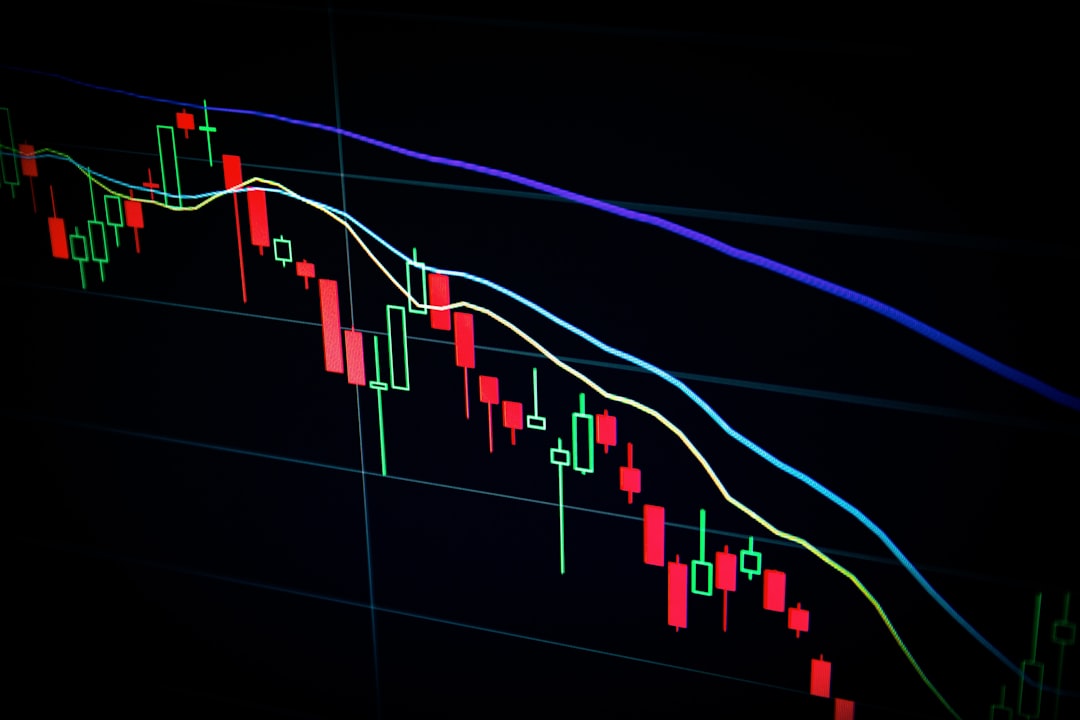
The tape is abundantly clear: this week's Polymarket prediction market action was dominated entirely by US Open ATP event contracts collapsing to zero or near-zero as match results rendered them resolved, with over $13.6M in aggregate 24-hour volume concentrated across eight markets — seven of them tennis, one a long-dated political position that barely moved. The volume concentration in sport tells you exactly where real capital is flowing in 2026's prediction market boom, and the Medvedev market's single-session -58 point crash carries the week's sharpest signal.
- Aggregate 24h volume (8 tracked markets)$0.0MWeeBet market data, Sep 7 2026
- Largest single-market 24h vol$0.00MMedvedev vs Tiafoe, Polymarket
- Biggest 24h price swing-0 ptsLehecka vs Tsitsipas
- Markets at 0–1% implied0 of 8All resolved or near-resolved
- Polymarket 7-day volume$0.0M+59.9%DeFiRate, Sep 4 2026
The US Open Ate the Tape
Flushing Meadows owns this week's position tracker. Seven of the eight highest-volume Polymarket markets recorded by WeeBet's desk are US Open ATP match contracts, all now resolved at 0–2% implied probability — the signature look of a fully settled event contract. The eighth, the Sarah Huckabee Sanders 2028 Republican nomination market, is the lone outlier: a long-dated political position that barely budged (24h: n/a, 7d: -0 pts) while generating a still-substantial $1.69M in volume on our 24-hour read. That asymmetry is the week's clearest structural story. Acute-resolution sports contracts are pulling institutional-sized volume on Polymarket, while political markets — historically the platform's prestige product — cruise along as background noise in comparison.
Monthly trading volume in prediction markets, which hovered around $1.2 billion in 2025, entered a regime of sustained double-digit billions by early 2026, exceeding $20 billion per month.
That macro-level expansion is showing up at the micro level in our desk data.
Polymarket's 7-day rolling volume sits at $925.9 million, up 59.9% week-on-week, with sports representing $40.8 million of its 24-hour category breakdown.
The US Open is a meaningful driver of that surge.
The Medvedev Crash: $2.2M and 58 Points Gone in 24 Hours
The Medvedev vs Tiafoe market was the week's single largest mover in both volume ($2.21M) and point-swing (-58 pts, landing at 1%). The catalyst is unambiguous.
Frances Tiafoe beat seventh-seeded Daniil Medvedev 7-6 (7/1), 6-4, 7-6 (8/6) to reach the quarterfinals for the fourth time in five years.
Any position-holder who entered the week long on Medvedev at ~59% faced near-total drawdown.
What makes this market instructive is what pre-match positioning revealed about crowd conviction versus result reality.
Entering the match, Medvedev led the head-to-head 6-1 and was priced as a clear favourite at 1.61x payouts against Tiafoe's 2.22x.
The market was broadly right to favour Medvedev on priors —
he ranked first among the ATP top 50 in return points won on hard courts this season at 41.1%
— but sports contracts carry a hard lesson that prediction market newcomers consistently relearn: historical probability and in-match reality are separate conversations.
Tiafoe, seeded 11th, overturned a difficult recent record against Medvedev, who had won six of their previous seven meetings.
The court itself mattered: Tiafoe's New York crowd advantage is a genuine, quantifiable factor that odds models underweight. The 58-point crash from ~59% to 1% in a single 24-hour window represents the most textbook resolution event in our eight-market dataset this week.
Alcaraz and the Two Markets That Tracked His Path
The Tommy Paul vs Carlos Alcaraz contract (now 2%, 24h -16 pts, $2.08M volume) and the Yibing Wu vs Carlos Alcaraz contract (now 0%, 24h -7 pts, $2.05M volume) tell a paired story: Alcaraz resolved both markets in short order, and capital flowed into each at scale.
Carlos Alcaraz continued his title defence by defeating American 20th seed Tommy Paul 6-4, 6-3, 6-4 to book his place in the quarterfinals.
Earlier in the draw, Alcaraz had beaten Yibing Wu 6-3, 6-4, 6-1.
Both markets were effectively pricing the winning probability of Alcaraz's opponent — Wu and Paul respectively — so the terminal slide to 0%/2% reflected matches that played out close to consensus expectation. What's notable here is the -7 point swing on the Wu market versus the -16 on Paul: the market was already pricing Wu at near-zero coming in, while Paul, a 20th seed and hard-court specialist, held more residual probability heading into the Sunday session.
On the broader US Open men's winner market currently trading $26M in volume, Alcaraz leads at 59% with Zverev at 22% and Ben Shelton at 9%.
The market is essentially a two-horse race at this point, and anyone who held Alcaraz positions through the earlier rounds has seen consistent mark-to-market gains as his draw cleared.
The Lehecka-Tsitsipas Reversal: Market Got It Wrong
The Lehecka vs Tsitsipas market logged the week's single largest point swing in raw terms: -62 points in 24 hours, collapsing to 0%, on $1.67M volume. This is the week's most instructive mis-pricing story.
The result: Stefanos Tsitsipas beat Jiri Lehecka 2-6, 6-1, 7-6 (7-3), 6-1.
The market's contract was priced on Lehecka winning — and at a swing of 62 points, the pre-match implied probability had Lehecka somewhere around 62–65% at the start of the 24-hour window. Lehecka entered as the higher seed at No. 18 and had been in form,
having beaten Pablo Carreno Busta in straight sets in the first round.
Tsitsipas, unseeded and coming off inconsistent recent form, was the upside trade.
The result illustrates the risk that concentrated single-match event contracts carry. A -62 point resolution in 24 hours is not a signal that the market was incompetently set — it reflects a legitimate 35–38% implied probability attached to Tsitsipas winning, which is a real chance, not a long shot. But if you were holding Lehecka "YES" positions going into match day, the outcome was a total loss. Risk disclosure matters here: short-duration sports contracts resolve binary and fast. There is no recovery window.
Bublik, Mensik, and the American-Night Session Block
Three further markets cluster around the $1.9–2.1M 24-hour volume band and each resolved against the market's pre-match favourite.
The Bublik vs Tommy Paul market (now 2%, -38 pts, $2.11M) resolved as Paul advanced.
Tommy Paul beat Alexander Bublik 6-4, 3-6, 6-7 (4-7), 6-1, 6-3
in a five-set match that spilled across sessions. Bublik, priced at around 40% implied pre-match (extrapolating the -38 point collapse), is the type of unpredictable serve-based player who attracts speculative positioning — he can beat anyone or retire mid-match.
The Mensik vs Learner Tien market (now 1%, -44 pts, $1.90M) ended in similar fashion.
Tien advanced with a hard-fought 6-3, 1-6, 6-7(2), 6-3, 6-4 victory against Mensik in a three-hour, 24-minute battle inside Louis Armstrong Stadium that spilled into the early hours of Sunday morning.
With the win, the 20-year-old became the youngest American to reach the US Open fourth round, matching Andy Roddick's record.
The market was pricing Mensik at roughly 45% based on the -44 swing — reasonable given
Mensik's serve has averaged 11.13 aces per match in 2026 and his delivery was a genuine threat.
The Otto Virtanen vs Andrey Rublev market (now 0%, 24h n/a, $1.96M) is the cleanest: Virtanen was essentially already resolved before our 24-hour capture window.
Rublev had already been knocked out early
—
Daniel Merida defeated Andrey Rublev 6-7 (3), 6-2, 6-4, 6-4
in one of the draw's significant early upsets — meaning the Virtanen market had already priced to zero before our tracking desk recorded it this morning.
The Political Outlier: Sanders at 0% With $1.69M Moving Through
The lone non-tennis market in our dataset is the "Will Sarah Huckabee Sanders win the 2028 Republican presidential nomination?" contract: 0% implied probability, 7d -0 pts, $1.69M in 24-hour volume. That combination — significant volume, zero price movement, near-zero probability — is a very specific market signature. It says: many traders are touching this contract, but no one is repricing it.
Why is this market at 0% at all? The 2028 Republican field is genuinely crowded.
Speculative contenders include Marco Rubio, J.D. Vance, Vivek Ramaswamy, Tim Scott, and Elise Stefanik alongside Sanders.
Sanders herself has been publicly coy about national ambitions while keeping her state-level positioning tight.
Her new biography, Unapologetic, is widely read in Arkansas political circles as a signal she is eyeing a bigger office in 2028.
She has focused on education reform, tax cuts, and economic development, positioning herself as a potential 2028 contender if the Republican field opens.
The 0% price likely reflects Polymarket's resolution framing and the breadth of the field, not the underlying probability of her candidacy. The $1.69M volume flowing through a 0% market in 24 hours is itself the signal: there is sustained interest in this question, even if traders aren't willing to pay for it at current prices. That's worth watching as the field crystallises post-midterms in November 2026.
The Counter-Argument
The obvious challenge to this week's analysis is that resolved sports contracts are essentially noise. Once a match ends, the market moves to 0% or 100% mechanically — the price swing reflects settlement, not informed opinion. By that reading, the -58 points on Medvedev-Tiafoe tells you nothing about collective forecasting accuracy. It just tells you Tiafoe won.
That critique has real force. The more epistemically interesting period for sports event contracts is before the match, when implied probabilities are actively contested. Our desk captures post-resolution snapshots, which are definitionally less informative about crowd intelligence than pre-match mid-session pricing. The Tsitsipas reversal is only meaningful if you know what Lehecka was trading at four hours before match point, not what he's trading at the moment of resolution.
TRM Labs' on-chain analysis has identified clusters of potentially coordinated activity coinciding with major events, raising questions about whether certain price movements reflect genuine crowd wisdom or structured positioning.
Legislative proposals have called for explicit bans on insider trading in prediction markets, and both Kalshi and Polymarket publicly outlined new measures to curb insider trading in March 2026.
In short: even if you accept that sports contract prices are meaningful pre-match, you cannot be certain the book is clean.
That said, volume is a real signal regardless of timing. $2.2M flowing through a single-match tennis contract in 24 hours represents genuine capital-at-risk, not phantom interest. The scale of engagement with US Open ATP markets on Polymarket this week is a fact, not an artefact.
What I'm Watching
1. US Open QF: Tiafoe vs Alcaraz, September 9.
Tiafoe will next face Alcaraz, who leads their head-to-head 3-0 though they have not met since last year's Roland Garros.
The winner market currently prices Alcaraz at 59% for the title
— watch how the Tiafoe match-specific contract prices when it opens and whether it reflects the broader winner-market gap or compresses it.
2. Learner Tien's fourth-round contract.
Tien is now the youngest American to reach the US Open fourth round and next faces Karen Khachanov.
His market will be a case study in whether Polymarket prices 20-year-old momentum correctly or anchors to ATP ranking differentials.
3. The Sanders market price floor. With the Arkansas gubernatorial election on November 3, 2026,
Sanders seeking a second term
will either consolidate or complicate her national positioning. Watch if the 2028 Republican nomination contract budges off 0% post-election — that market absorbing $1.69M at zero is a tension that resolves eventually.
4. Polymarket weekly volume momentum.
Polymarket's 7-day volume is up 59.9% week-on-week to $925.9M,
but
monthly volume peaked at $10.5B in March 2026 and tracked at $8.9B in May
— the question is whether the US Open provides a sustained sports-driven catalyst or a one-fortnight spike.
5. Post-US Open political market reactivation. Once the tournament resolves around September 13, capital sitting in sports contracts will rotate. The Fed September decision market is the most likely destination —
it is already the top market on Polymarket's finance page
— and its pricing will be the cleanest read on where macro-focused traders are positioned heading into the FOMC meeting.
About the author
WeeBet's editorial desk: daily news, weekly analysis, and operator reviews across prediction markets, crypto gambling, sweepstakes, and DFS. Bylined collectively for cross-vertical perspective.
Related analyses
WeeBet Weekly
The week's biggest market move, in 4 minutes.
Every Friday: the top Polymarket and Kalshi price shift, one regulatory story that actually matters, and one chart. No fluff, no promo. Free.
Free. Unsubscribe in one click. We'll never sell your email.