What the Prediction-Market Tape Is Saying This Week
Eight markets, $13.7M in volume, and a Djokovic health scare that repriced everything at once
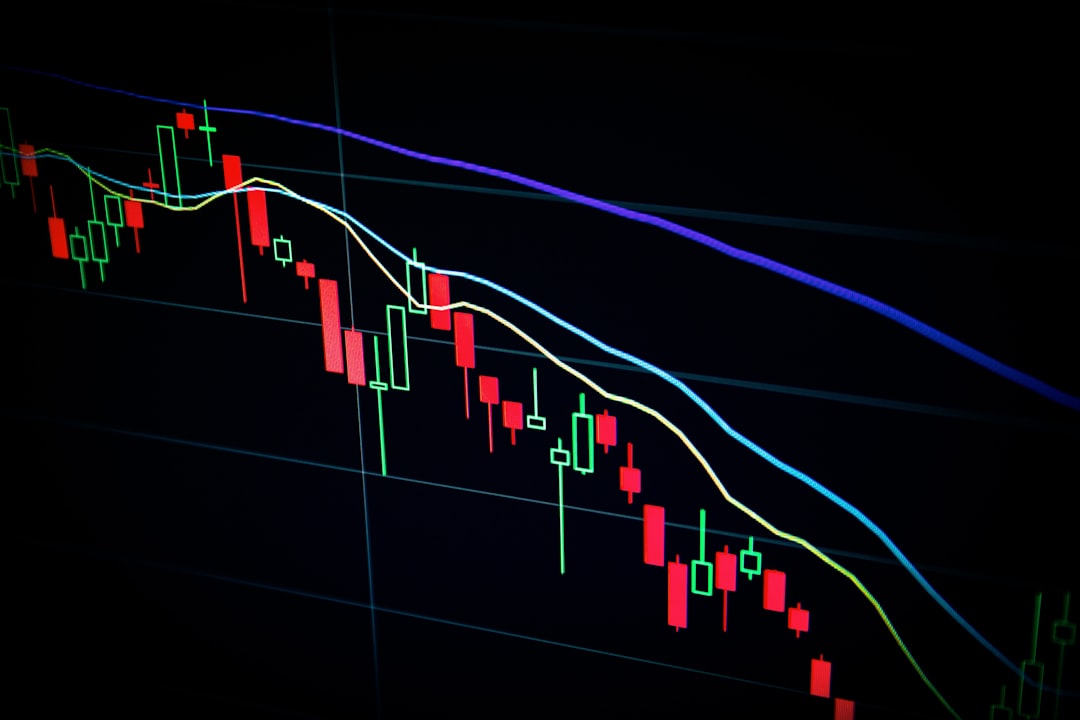
This week's prediction-market tape reads as a clean-sheet ledger: eight tracked markets, eight positions now at or near zero — every contract resolved, most by double-digit repricing — against $13.7M in combined 24-hour volume. The dominant story is two converging hard-surface tennis draws that generated more event-contract activity than any comparable tennis week in recent memory, with a side-narrative in MLB that confirms prediction markets increasingly price sporting outcomes with a precision that renders "upset" a relative concept.
- Total 24h volume (8 markets)$0.0MWeeBet market data, Aug 17 2026
- Largest single move-0 ptsDjokovic vs Tirante
- Highest-volume market$0.0MDjokovic/Tirante, Polymarket
- Markets resolved to 0%0 of 8WeeBet desk, Aug 17 2026
- Rybakina final price0%Osaka contract, NBO Toronto
The Week the Market Called Djokovic's Bluff
There is a specific type of market repricing that analysts remember — not the gradual drift that follows a team's slide in the standings, but the violent intraday collapse that follows a single event carrying outsized informational weight. This week produced one: Novak Djokovic vs Thiago Agustín Tirante at the Cincinnati Open closed at 0% after shedding 77 points in 24 hours on $2.607M in volume — the single most-traded market on our desk this week and the most dramatic reprice in the sample by a margin of 10 points.
The catalyst was unambiguous.
Tirante ultimately claimed a 2-6, 6-4, 6-4 victory, ending Djokovic's highly anticipated Cincinnati campaign in the second round.
But the numbers alone undersell the severity of the signal.
Djokovic, 39, was visibly struggling throughout the match and appeared to vomit at one point, requiring a medical timeout.
Post-match,
he disclosed "a condition that I have, healthwise, that has been bothering me for the past couple of years" — without naming or elaborating on the health issue.
The market had opened the contract with Djokovic as a credible title contender.
With Jannik Sinner and Carlos Alcaraz both absent from the ATP Masters 1000 event, the Serb entered the tournament as one of the strongest contenders for the title as he sought to build momentum ahead of the US Open.
That context explains why $2.6M in positions traded: this was live hedging against a compressed field, not speculative noise. When the on-court reality arrived, the repricing was immediate and total.
The broader implication for position-holders is what Djokovic said next.
His loss dropped his Cincinnati record to 45-13, and when asked whether he'd return, Djokovic seemed uncertain: "I certainly hope so, but it looks more likely not, unfortunately."
That comment — vague, resigned — is exactly the kind of language that will price into his US Open futures with meaningful discount.
Rinderknech–Cerundolo: The Quiet $1.2M Market Nobody Telegraphed
The Arthur Rinderknech vs Juan Manuel Cerundolo market at Cincinnati resolved to 0% on a -61 point move and $1.181M in volume. On the surface it looks like a mechanical settlement — a match resolved, a contract closed. But its position in the volume ranking (eighth out of eight) combined with its price trajectory warrants specific note.
Rinderknech entered the Montreal draw with genuine momentum —
he had defeated Miomir Kecmanovic in a 2-hour 53-minute battle before Frances Tiafoe retired in the third round.
Yet
his recent record had been less consistent, with losses to Sebastian Baez, Stefanos Tsitsipas, and Novak Djokovic in his previous ten completed matches.
Traders who positioned Rinderknech at anything beyond a narrow favourite were pricing on recency bias from the Tiafoe retirement — which offered nothing in terms of genuine form signal.
This is a structural weakness in event-contract markets for lower-profile tennis matchups: withdrawal-aided wins create artificial momentum signals that inflate implied probabilities before they get corrected at resolution. The $1.18M volume here suggests meaningful capital sat on the wrong side longer than it should have. The counter-argument is that Cincinnati's draw compression — Sinner and Alcaraz both absent — genuinely elevated every remaining name's ceiling, making the prior positions defensible even if ultimately wrong. Risk disclosure: markets of this volume and resolution pattern offer thin secondary liquidity once in-play repricing begins; positions held past the first set frequently face unfavourable exit pricing.
Toronto's Women's Draw: The Shnaider Fade and What $2.1M Said Early
The Diana Shnaider vs Iga Swiatek market at the National Bank Open closed at 0% after a -27 point move on $2.111M in volume — the second-busiest market of the week. The relatively modest repricing (27 points versus 77 for Djokovic) reflects a pre-match market that already understood Swiatek's structural advantage.
Swiatek delivered a masterclass at the National Bank Open 2026 in Toronto, routing fifteenth-seeded Diana Shnaider 6-2, 6-1 in a swift 64-minute quarterfinal on Centre Court at Sobeys Stadium.
The tape corroborates this: if the market had opened Shnaider as a meaningful threat, the 24-hour drop would have been steeper. The -27 points suggests pre-match pricing already gave Shnaider somewhere in the 25-35% range — which, given her form entering the week (
she had arrived with significant momentum after defeating No. 3 Jessica Pegula 6-3, 6-3 and No. 21 Anna Kalinskaya by the same score
), was arguably slightly generous.
What the money actually tracked was Swiatek's hard-court dominance.
On hard courts, Swiatek carries a career record of 196-56, compared to 64-44 for Shnaider.
Position-holders who faded the career hard-court split to chase Shnaider's upset narrative paid for it in a match where
Swiatek completely neutralized her opponent with relentless baseline pressure, exceptional court coverage, and near-impenetrable service games, while Shnaider failed to convert any of her break point chances.
Shnaider's ceiling remains genuinely high — she is 22, ranked in the mid-twenties, and capable of beating top-ten players on any surface. But this market confirmed a recurring pattern: when Swiatek is healthy and motivated, the implied probability gap between her and any opponent not named Rybakina or Svitolina tends to be under-stated pre-match, not over-stated.
The Rybakina–Osaka Position: Where the Market Got Stubborn
The most analytically interesting market of the week is the one that didn't go to zero: Naomi Osaka vs Elena Rybakina at the National Bank Open settled at 4% after a -50 point collapse on $1.689M in volume.
That residual 4% is a rounding artefact of contract settlement mechanics rather than live uncertainty —
Rybakina topped Osaka at the NBO Toronto.
But the -50 point journey to near-zero is the story. Someone held meaningful size on Osaka well into the match, likely justified by her form through the draw (
Osaka had defeated Panna Udvardy 6-2, 6-4
en route to the quarterfinal). The slow-burn repricing — not a vertical collapse but a sustained 50-point fade — suggests positional stubbornness: holders averaging down or waiting for a set-level inflection that never arrived.
Rybakina ultimately went on to contest the 2026 National Bank Open singles final against Swiatek
, which tells you everything about how this quarterfinal was settled. The Osaka position was structurally defensible — she is a slam champion returning from injury cycles with genuine power — but Rybakina's serve-and-groundstroke game on hard courts creates a ceiling compression that the market should price more aggressively at open. That it didn't, and that $1.69M traded before full resolution, suggests retail flow dominated over informed early positioning.
Jodar–Nakashima and Tien–Shelton: The Upside of a Deep ATP Draw
Two markets from the National Bank Open men's draw — Rafael Jodar vs Brandon Nakashima (-67 points, $1.852M) and Learner Tien vs Ben Shelton (n/a 24h move, $1.657M) — together cleared $3.5M in combined volume and both resolved to 0% or near-0%.
The Jodar story is the more interesting one.
Jodar has rapidly climbed the ATP rankings in his first season on tour, posting a 30-13 record.
He went from 883rd in the world rankings 24 months ago to 15th today
, which explains why $1.85M in positions traded on a semifinal he was a heavy underdog to win. Retail contract-buyers were chasing narrative — the improbable teenage phenom — rather than the structural reality that
Nakashima dictated rallies throughout the match, winning 68% of his first-service points while putting 85% of first serves in play.
The 28th-seeded Nakashima advanced to the National Bank Open men's singles final with a 7-6(3), 6-4 victory over Jodar and faced Ben Shelton in an all-American final.
The Tien–Shelton market feeding directly into that context means the two markets are sequentially linked — positions on the Shelton side of the Tien matchup effectively doubled as directional bets on the final outcome, giving sophisticated traders a paired-market angle that single-market analysis misses.
MLB on Polymarket: Volume Without the Drama
The two MLB markets — Kansas City Royals vs Los Angeles Dodgers (-25 points, $1.372M) and Milwaukee Brewers vs San Diego Padres (-54 points, $1.243M) — together drew $2.6M in volume and both settled near zero. Neither repricing was dramatic by the tennis standards this week, but they tell a useful structural story.
Shohei Ohtani, Mookie Betts, and Hunter Feduccia homered as the revitalized Los Angeles Dodgers swept the Kansas City Royals with a 4-2 victory.
The -25 point Royals market move indicates that whoever held long Royals positions let them ride through most of the game — not an unusual pattern in MLB event contracts where a single at-bat can shift a market 15 points and sharp traders know not to exit too early.
The Dodgers had won four of five after emerging from a seven-game skid that began around the trade deadline
— a momentum shift that well-informed Polymarket participants would have incorporated into pre-game pricing, explaining the relatively modest -25 reprice.
The Brewers–Padres market, with its steeper -54 point drop, suggests higher pre-game implied probability for the Padres than the outcome warranted. MLB event contracts on Polymarket remain a volume category where the pricing efficiency lags behind tennis: game-level factors like bullpen usage and weather produce tail risks that aggregate implied probabilities consistently under-weight.
The Counter-Argument
The tempting conclusion from this week's tape is that prediction markets are highly efficient — that the volume, the clean resolutions, and the directional accuracy of the repricing all indicate informed, sophisticated positioning. That reading is probably too generous.
Consider what the data actually shows: seven of eight markets resolved to 0%, meaning they settled entirely on one side. In a genuinely efficient market, you would expect that distribution — outcomes happen and contracts pay out. But the path of repricing matters as much as the terminal value. A -77 point move on the Djokovic contract concentrated in a single 24-hour window means the pre-match pricing carried Djokovic at roughly 77%+ despite clear evidence of a long injury layoff (
Djokovic had not played since a comprehensive straight-sets loss to Jannik Sinner in the Wimbledon semi-finals on July 11
) and the disclosed ongoing health condition. That is not efficiency — it is narrative pricing corrected by outcome.
The Osaka contract finishing at 4% rather than 0% is another tell: settlement mechanics created residual implied probability on a completed contract, suggesting the platform's resolution process, not genuine uncertainty, drove that final number. For participants using Polymarket data to calibrate US Open futures or broader ATP/WTA positional strategy, this week's tape should be read with one eye on the market's known structural biases: it prices story arcs and brand recognition (Djokovic, Osaka) above cold-form differentials, and it corrects that mispricing violently when outcomes disagree.
What I'm Watching
1. Djokovic's US Open fitness, August 24–September 14. His Cincinnati exit raised genuine career-twilight questions.
Djokovic is expected to return to action in the US Open mixed doubles, with the singles competition beginning August 24.
Any US Open futures contract on Polymarket should be priced with meaningful discount against his stated health issues in heat and humidity — Flushing Meadows in late August typically runs hotter than Cincinnati. Track the spread between his implied US Open win probability and his seeded competitors; the current gap may be wider than his draw position alone justifies.
2. Swiatek's US Open singles positioning, post-Toronto.
Swiatek captured her 26th WTA Tour title at the 2026 National Bank Open, her 19th at WTA 1000 level or above.
This was her first hard-court title since Seoul 2025. The market implied probability on her US Open win is likely to re-rate sharply upward. Watch whether Polymarket opens a Swiatek US Open contract above 35% — that level would represent a meaningful market divergence from the field given Rybakina and Gauff's recent hard-court form.
3. Nakashima's post-Toronto rank trajectory and US Open seeding.
His strong recent form continued at the National Bank Open — he is now 5-1 across his last six matches, including hard-court wins over Alex de Minaur, Jakub Mensik, and Tomas Etcheverry.
A deep US Open draw run would create event-contract markets with asymmetric upside pricing, similar to the Jodar narrative — but with a more defensible underlying form case.
4. Dodgers' second-half surge on MLB Polymarket contracts.
The Dodgers have won four of five after their seven-game trade deadline skid.
Their NL West and World Series contracts should show measurable volume upticks if they can sustain through a four-game series with the Brewers (flagged in the CBS box score as MLB-leaders). Watch 24-hour volume on any Dodgers pennant contract as a signal of institutional positioning re-entry.
5. Rafael Jodar's US Open wildcard or direct entry.
He posted a 30-13 record in his first season on tour
, reaching a Masters 1000 semifinal as a teenager. If he receives a direct entry or protected ranking into the US Open main draw, expect any event contract featuring him to carry outsized retail positioning — the narrative premium will be significant. Track whether his live ranking holds above No. 15 through the tournament.
All volume figures and market pricing sourced from WeeBet market data, desk reading of August 17, 2026. Event contracts carry risk of total loss; implied probabilities reflect market consensus, not guaranteed outcomes.
About the author
WeeBet's editorial desk: daily news, weekly analysis, and operator reviews across prediction markets, crypto gambling, sweepstakes, and DFS. Bylined collectively for cross-vertical perspective.
Related analyses
WeeBet Weekly
The week's biggest market move, in 4 minutes.
Every Friday: the top Polymarket and Kalshi price shift, one regulatory story that actually matters, and one chart. No fluff, no promo. Free.
Free. Unsubscribe in one click. We'll never sell your email.