The Three Structural Bets WSOP Is Making in 2026
ESPN, Solana, and a cliffhanger finale — the 57th series is more than bracelet results
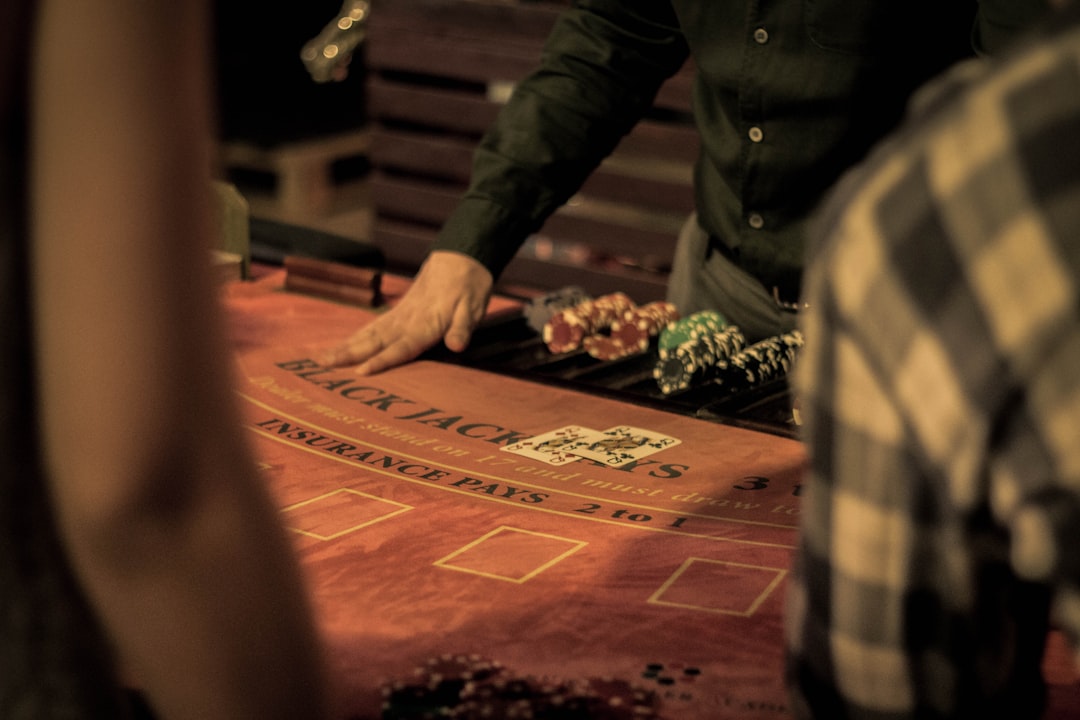
The 2026 WSOP is running its most structurally ambitious edition in a decade — an ESPN multi-year broadcast deal, the first-ever crypto buy-ins powered by Solana and MoonPay, a deliberately engineered "cliffhanger" final table, and a run of elite performer results that are reshaping the Player of the Year race — and reading any single story in isolation misses the forest for the trees.
In 2025, the WSOP's flagship Las Vegas series attracted 246,960 entrants and awarded more than $481 million in prize money, both all-time records.
The 2026 edition has been designed to beat that number — not just on entries, but on cultural reach.
- 2025 WSOP entrants0All-time record, prior year
- 2025 prize money$0M+All-time record, prior year
- 2026 bracelet events0 live + 30 online57th annual series
- ESPN daily coverage0 hrs/day minNew multi-year deal
- Foxen $25K High Roller payout$0Record women's WSOP score
- Mateos SHR payout$0Event #41, youngest 6-bracelet player
The Three Structural Bets WSOP Is Making Simultaneously
Most WSOP coverage treats each bracelet in isolation: who won, for how much, in what format. That's fine for a live-blog. It misses the real story of the 57th annual series: Caesars Entertainment's new ownership is running three parallel experiments on the same canvas, each with its own payoff timeline and risk profile.
The first bet is on broadcast reach.
In March 2026, the WSOP announced a historic multi-year agreement with ESPN to return poker's most prestigious event to the network, with ESPN providing comprehensive coverage of the Main Event culminating in a highly anticipated three-night live finale on linear television.
The deal is not simply a distribution arrangement — it is a production bet.
WSOP has engaged Omaha Productions, known for Monday Night Football's "ManningCast" and Netflix's "Quarterback" and "Receiver," to apply its signature storytelling lens to the poker table.
That is a meaningful creative signal: the brand wants poker treated as athletic narrative, not casino content.
The second bet is structural.
In a strategic return to a "cliffhanger" television format, once the tournament reaches the final table on July 13, play will pause; the surviving finalists reconvene 20 days later for a live, three-day televised finale airing August 3–5 from 9pm–12am EST, while ESPN airs specially curated prime-time episodes to build momentum during the hiatus.
Anyone who lived through the November Nine era (2008–2016) knows the format has a complicated legacy — three months between final table and finale was broadly seen as too long.
That format ran for more than three years and was widely criticized.
A 20-day gap is the compromise: long enough to generate editorial content, short enough to prevent the market from going cold.
The third bet is on crypto payments — more on that below.
The ESPN Deal Is About Distribution Economics, Not Nostalgia
There is a temptation to frame the ESPN return as a sentimental reunion.
ESPN and the WSOP have a partnership stretching nearly 40 years, and it played a key role in turning poker into a popular spectator sport, especially during the poker boom of the mid-2000s.
That framing undervalues what is actually happening in 2026.
Television and streaming coverage of the Main Event returns to ESPN as part of a multi-year rights deal with at least six hours per day of live coverage on the ESPN app.
Six hours a day, across the Main Event's 12-day run, plus the three-night August finale, plus
approximately 100 hours of original programming per year across ESPN platforms.
For comparison, major professional golf majors run four days of broadcast. The WSOP is asking ESPN to treat a poker tournament like an Olympics sport.
The Main Event returns to TV in the United States on ESPN from July 2, and worldwide to more than 130 countries and over 300 million homes via ESPN networks, TSN, Disney+, Groupe M6, Abema Japan and Warner Bros.
The international distribution stack matters. GGPoker, which handles international satellites and is the WSOP's online partner outside the US, gains a global marketing vehicle at exactly the moment it needs to justify its annual satellite investment.
Players can qualify for the 2026 WSOP via GGPoker outside the US, as well as on WSOP Online in New Jersey, Pennsylvania, Michigan, and Nevada.
Every hour of ESPN Main Event programming is, functionally, a top-of-funnel acquisition tool for both WSOP's own platform and GGPoker's satellite ecosystem.
The risk the WSOP accepted in this bargain is structural dependence. If ESPN underperforms on ratings, or if the cliffhanger format generates spoiler fatigue — the final nine players are known for 20 days before the finale — the brand is exposed in a way a pure-streaming model would not have created.
Crypto Buy-Ins: Infrastructure Move, Not Marketing Stunt
On June 10, 2026, the WSOP announced a first-of-its-kind collaboration with the Solana Foundation to bring cryptocurrency directly into the global poker experience; beginning that day at the Paris Las Vegas and Horseshoe Las Vegas, players can complete tournament ticket purchases using Solana, powered by MoonPay's payment infrastructure — the first time in WSOP history where players can purchase tickets directly with cryptocurrency, with zero processing fees.
The transaction mechanics are worth examining.
Players can purchase their ticket using USDC, USDT, or SOL — no conversions, no extra steps, no friction between wallet and seat.
This is not a gimmick. International players — specifically those from jurisdictions where wire transfers from tournament winnings trigger compliance delays, currency controls, or banking friction — gain a real practical benefit.
At WSOP Paradise in the Bahamas this December, players who cash in tournaments will be able to receive winnings in stablecoins on Solana, enabling near-instant settlements; for poker professionals who regularly travel internationally, faster access to winnings could significantly reduce the administrative complexity surrounding tournament payouts.
The Solana Foundation is also serving as the presenting sponsor of both the 2026 World Series of Poker and WSOP Paradise.
That sponsorship framing tells you which party needed this deal more urgently. Solana is expanding its real-world payments narrative —
the blockchain is capable of processing thousands of transactions per second, with average fees remaining below $0.001
— and the WSOP provides mass-market credibility that pure DeFi use cases cannot. For the WSOP, the financial upside is the sponsorship fee and improved international accessibility; the downside risk is regulatory exposure in states or jurisdictions where crypto transactions for gaming remain grey.
WSOP 2026 Payment Options at Point of Entry
| Payment Method | Processing Fee | Int'l Friendly | Payout Option |
|---|---|---|---|
| Cash / Cage | None | Moderate | Cash / Wire |
| ACH (US only) | None | US only | Bank transfer |
| Solana via MoonPay | Zero | Yes | Stablecoin (Dec, Paradise) |
| Wire transfer | Varies | Yes | Wire |
Source: WSOP.com, Solana Foundation press release, Jun 10 2026
The Foxen Phenomenon and What Elite Dominance Signals
Bracelet winners tend to blur into a single data stream by mid-series. Three stories this week cut through that noise.
On June 7, Kristen Foxen took down the 2026 WSOP $25,000 No-Limit Hold'em High Roller for her sixth WSOP bracelet and a new career-best payday of $1,773,083, outlasting 345 entries in a field packed with elite professionals.
The number that matters more than the prize is the margin of record:
she now has twice as many bracelets as any other woman in the game, with Vanessa Selbst, Barbara Enright, and Nani Dollison tied for second with three each.
Her $20,729,755 in lifetime earnings also gives her roughly a $9.8 million lead over Selbst, who ranks second on the women's money list.
This is not incremental progress — it is the construction of a statistical floor that will define women's poker history for at least a generation.
Meanwhile,
Adrian Mateos made WSOP history with his sixth bracelet, becoming the youngest player ever to reach the historic milestone at age 31.
His Event #41 victory —
the $250,000 Super High Roller, defeating all-time tournament earnings leader Bryn Kenney to scoop $4,334,411
— landed in the same week as the Foxen result. Two historically significant bracelet milestones in a single week is not routine; it is the kind of density that wins editorial cycles.
Add the Player of the Year subplot:
Alex Foxen holds the POY lead at 2,720 points after his fourth bracelet win and consistent deep runs throughout the series.
Chris Hunichen sits seventh at 1,753 after strong Poker Players Championship results; Naoya Kihara sits fourth at 2,007 after his seventh-place finish in the $50,000 PLO High Roller, adding to his two bracelet wins earlier in the series.
The Foxen household alone — Kristen with six bracelets, Alex leading POY — has become the dominant narrative thread of a 100-event series. That is both remarkable and, from a storylelling perspective, almost exactly what Omaha Productions would have ordered.
The Main Event: What the Numbers Expect
The defending WSOP Main Event champion is Michael Mizrachi, who won the 2025 Main Event, taking home $10,000,000 and topping a field of 9,735 players — adding the Main Event title to his fourth WSOP Poker Players Championship win the same year.
That 9,735-player field was the third-largest in series history, following consecutive record years in 2023 and 2024.
A field north of 10,000 entries is the expected base case for 2026, which would push first place comfortably past $11 million; even a modest 9,500-entry field generates more than $90 million in prize pool money, with roughly 1,400 entries cashing for at least $15,000 each.
The 2026 WSOP Main Event will take place July 2–July 13
, with
four starting flights from July 2–5, play continuing until the final table is reached on July 13, then a return after a three-week break to play out live on August 3–5.
The July 4th holiday weekend placement of Day 1A and 1B is deliberate — recreational players who would not normally take a full week off Las Vegas can combine a holiday trip with Main Event participation. The WSOP has engineered its highest-probability path to 10,000-plus.
The $10,000 buy-in has remained constant since 1972; despite inflation pushing its equivalent value to around $86,000 today, the tournament has kept its original entry price.
That inflation-adjusted discount is, effectively, one of the most sustained value-preservation acts in competitive sports. It is also the primary reason the Main Event remains accessible to the recreational player who funds the ecosystem.
The Infrastructure Layer: WSOP LIVE App and the Mothership Stage
Two operational stories passed with less attention than they deserved.
The WSOP LIVE app made its Las Vegas debut at the 2025 WSOP with mandatory registration, and despite initial concerns, has proven to be a useful addition, significantly enhancing the experience; the WSOP has since rolled out the app to all WSOP Circuit stops.
In 2026, the app is not a feature — it is the operating system.
It facilitates tournament registration, seating, chip counts, payouts, and tracking.
Registrations that once required a physical queue at a cage can now be handled from a hotel room. For an event that draws players from 130-plus countries, reducing friction at the point of registration is a volume multiplier.
The Mothership stage is a separate signal.
The series debuted a major new addition: the Mothership stage inside the Paris Ballroom.
Daniyal Gheba's first-bracelet win in the $5,000 No-Limit Hold'em Eight-Max event was the first bracelet awarded on the new stage — the Las Vegas player topped 570 entries for a career-high $502,985.
Purpose-built broadcast infrastructure matters for the ESPN deal: six hours of daily programming requires multiple simultaneous camera setups. The Mothership provides a permanently designed television environment rather than a pop-up broadcast rig.
The Counter-Argument
The bullish read of the 2026 WSOP is compelling but worth stress-testing.
The ESPN deal and the cliffhanger format assume poker can sustain linear television audiences in 2026 the way it did in 2005. That assumption is fragile. The poker boom was driven partly by ESPN's reach, but primarily by Chris Moneymaker's underdog story landing at a cultural moment before streaming alternatives existed. Today, a player who wants poker content can watch high-stakes cash games on Hustler Casino Live or PokerGO any night of the week. The scarcity that made ESPN Main Event coverage appointment viewing no longer exists.
The 20-day final table pause also carries spoiler risk that the November Nine format made catastrophically clear. By the time the August finale airs, the nine players' chip stacks, identities, and life stories will have been dissected across social media, forums, and rival coverage for three weeks. ESPN's edited prime-time "introduction" episodes will be competing against player content they cannot control — livestreams, podcasts, Twitter/X threads — that will have already told the stories ESPN planned to reveal.
On crypto: while the Solana partnership is practically useful for international players, the compliance exposure is real. Nevada gaming regulations around cryptocurrency transactions are still evolving, and any enforcement action — even a clarifying memo — during the Main Event window would generate exactly the wrong headlines for a series that spent $100 million in production and marketing to rehabilitate its broadcast brand. The upside for WSOP is a cleaner payment experience; the downside tail is reputational.
The elite dominance narrative has a structural weakness too. When the Foxen household and Adrian Mateos command the week's major storylines, it signals a talent concentration that can feel inaccessible to the recreational base the Main Event depends on. The most commercially successful WSOP eras were defined by amateur Cinderella stories — Moneymaker in 2003, Greg Raymer in 2004 — not by established pros winning their sixth bracelet.
What I'm Watching
1. Main Event field size — Day 1A, July 2. The real-time entry count on the WSOP LIVE app will be the first hard data point on whether the ESPN deal and holiday weekend scheduling generated incremental recreational participation. Target to watch: 3,500+ Day 1A entries (vs. roughly 3,200 in 2025).
2. Solana buy-in adoption rate through July 13. WSOP CEO Ty Stewart has made public statements about the crypto payment option. A post-series disclosure of the percentage of entries paid via MoonPay would be a genuine data point on crypto payment product-market fit in live gaming. Watch WSOP press releases and Solana Foundation social for any disclosed figures.
3. Alex Foxen vs. Shaun Deeb POY race through the $50K PPC.
The $50,000 Poker Players Championship is currently underway, with Kristopher Tong leading an all-star cast on Day 28.
This is the highest-points event remaining before the Main Event, and a deep run or win by either Foxen or Deeb could effectively close the race. POY determines $100,000 WSOP Paradise packages for the top three finishers.
4. ESPN final table ratings, August 3–5. The three-night finale is the entire bet. Overnight Nielsen ratings for a live poker broadcast on linear television will be the headline metric. Anything above 500,000 average viewers per night would validate the format. Below 200,000 would put the multi-year deal under editorial scrutiny by its second year.
5. WSOP Paradise stablecoin payout rollout, December 2026. The Solana buy-in is phase one.
Phase two comes at WSOP Paradise in the Bahamas this December, where tournament winners can receive settlements in stablecoins on Solana, enabling near-instant access to payments.
Whether Caesars' compliance team can execute cross-border stablecoin prize payouts at scale — particularly to players from jurisdictions with crypto restrictions — will determine whether this partnership is a proof of concept or a genuine structural change to how live tournament poker handles money.
Risk note: Cryptocurrency payments in gaming environments carry regulatory uncertainty that varies by jurisdiction. Any player considering Solana buy-ins should verify local legal status independently.
About the author
WeeBet's editorial desk: daily news, weekly analysis, and operator reviews across prediction markets, crypto gambling, sweepstakes, and DFS. Bylined collectively for cross-vertical perspective.
Related analyses
WeeBet Weekly
The week's biggest market move, in 4 minutes.
Every Friday: the top Polymarket and Kalshi price shift, one regulatory story that actually matters, and one chart. No fluff, no promo. Free.
Free. Unsubscribe in one click. We'll never sell your email.