What This Week's WSOP News Actually Means
From a shrinking $100K PLO field to a $100K charity pull — the WSOP is bifurcating, and the Main Event is the test.
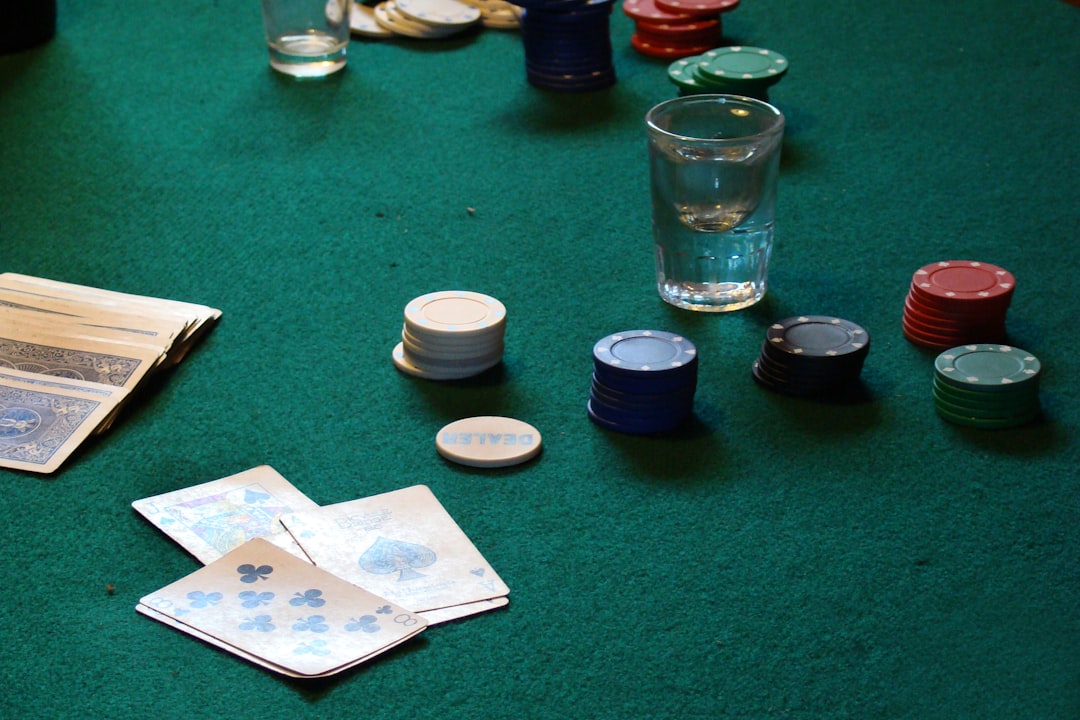
This week's WSOP coverage — high rollers shrinking, a charity pull going viral, a 20-year-old champion drawing lines around acceptable table talk, and a media brand dangling Aruba as an engagement hook — reads like scattered dispatches. It isn't. Every story maps onto the same structural tension: the 2026 WSOP is simultaneously trying to attract recreational players and broadcast-ready characters while the high-stakes game quietly contracts. The $100K PLO field dropping roughly 59% from its 2024 peak is the number that cuts through everything else.
- 2026 $100K PLO Day 1 field0 entries-41 vs 2024vs 121 in 2024 per Shaun Deeb win year
- Mystery Millions field0 entries4th-largest WSOP event ever
- 2026 Main Event flightsJuly 0–5Final table Aug 3–5 on ESPN
- Martirosian Day 1 bag0Event #76, after 2nd bullet
As of July 2, 2026
The Through-Line Nobody Is Writing
Four stories, one week, one underlying question: who is this game actually for?
The 2026 WSOP is the 57th annual edition of the World Series of Poker, running through July 15 at Paris Las Vegas and Horseshoe Las Vegas.
With the Main Event starting today, the editorial machine is running hot — results, debates, promotions, personality pieces. But read the week's coverage in sequence and a structural argument emerges. The WSOP is bifurcating. At the top end, high-roller fields are quietly softening. At the mass-market end, mystery bounty formats and freeroll contests are pulling in more recreational entrants than any time in the event's history. Jamie Gold drawing public distinctions between his 2006 table talk and what Kabrhel and Kassouf do in 2025 and 2026 is not just nostalgia — it is a branding exercise. The game is being repositioned for a television audience that hasn't watched seriously since the poker boom. The Aruba trip giveaway is not a side note. It is a direct response to that repositioning.
The $100K PLO Contraction Problem
Upon completion of ten levels in Event #76: $100,000 High Roller Pot-Limit Omaha, only 19 players remained — and four-time bracelet winner Artur Martirosian bagged 5,815,000 chips to establish a clear gap over second-placed Sean Winter at 3,695,000.
Those are impressive stack-to-chip figures. The field size is not.
That's way down from last year when 36 players bagged from a field of 88.
Go back one further year:
it will take a significant late surge to get close to last year's field of 121 entries, which gave winner Shaun Deeb a prize of nearly $3 million.
Fifty entries in 2026 against 121 in 2024 is not a blip — it is a 59% drop in a single tournament cycle. The prize pool math follows directly:
the most expensive four-card event of the summer drew 50 entries on Day 1, generating $4,800,000 so far with late registration open.
That's a fraction of what the 2024 event generated.
The counter-explanation is that
defending champion Shaun Deeb did not enter Day 1 while winning the 8-Game bracelet nearby
— and late registration remained open, so the final field could tick up. But $100K events are not price-sensitive in any meaningful way for the player pool who enters them. The softer field reflects something else: super-high-roller series like Triton are absorbing elite action at a parallel price point, giving top regs more efficient spots outside the WSOP calendar. When
the Russian high-stakes crusher Martirosian hunts his second bracelet of the summer and fifth overall
, the bracelet itself remains the carrot — but for the broader tier of occasional high-roller entrants, the WSOP's $100K no longer monopolises the market.
When bagging up his chips, Martirosian joked to the dealer: "If I have the same luck like today, I will finish it tomorrow" — though he had needed to fire a second bullet to reach the top spot.
That detail matters. Even the chip leader reloaded, which underscores that the event's structure rewards deep-pocketed persistence, not just skill. The risk calculus at this buy-in is substantial.
Martirosian and the Quiet Rise of the Non-American High-Roller
The Martirosian story is worth isolating from the field-size discussion because it tracks a longer pattern.
Martirosian took the $25,000 High Roller for $1,286,285 — his fourth bracelet at age 28.
He then loaded into the $100K PLO and leads after Day 1. That is two six-figure events at simultaneous WSOP stops within the same series week.
While Negreanu was the second-largest stack at Day 2, there was a familiar face in the number one spot: Martirosian — on the hunt for his second WSOP bracelet of the summer and fifth overall, having pulled clear of the field with Negreanu throughout the afternoon.
GGPoker ambassador Negreanu's presence makes for better broadcast copy, but Martirosian is the operational story. His trajectory — alongside players like Yuri Dzivielevski (
whose $100,000 High Roller victory of $2,841,432 was the largest single score of the series and his sixth career bracelet
) — signals that elite European and Russian talent has fully colonised the upper bracket of WSOP high-roller play. The Americans who dominated these fields a decade ago now share the spotlight with a cohort of internationally based crushers for whom Las Vegas is one stop on a year-round super-high-roller circuit.
The satellite angle adds texture here.
Phillipp Mellon satellited into the $100K — starting from a $120 Step 1, winning a seat in the $850 Step 2, then winning that to enter the $7,500 Step 3, which he won for the $100K PLO seat.
Mellon hung in with the pros for about four hours before bowing out against Sergio Martinez Gonzalez when he flopped two pair and ran into top set.
The contrast between Mellon's $120 path-of-dreams and Martirosian's cold, systematic two-bullet approach tells you everything about the two economies operating inside the same tent.
The Mystery Bounty Format Is Doing the Real Work
While the high-roller segment softens, the recreational engine is running harder than ever.
Matt Higgins took down the WSOP $1,000 Mystery Millions event and a gold bracelet, besting no less than 22,811 entries — the largest-ever $1K tournament in WSOP history and the fourth-largest of all time — for a $1M first prize.
That is the operational success story of this WSOP fortnight. The Mystery Millions format — random bounty envelopes containing prizes up to $1M — functions as a lottery mechanic wrapped in a poker tournament. It drives entry numbers that no skill-based format can replicate. Brian "Smitty" Smith's story sharpens the point:
Smith pulled a $100,000 gold chest in the WSOP Mystery Millions and donated it all to Purple Pansies pancreatic cancer charity.
A tall figure dressed fully in purple, Smith jokes he's a "walking billboard" for the charity — and on Sunday he pulled the gold chest and immediately announced the entire $100,000 was going to the cause.
While he didn't win the tournament, Smith continued his spin-up all the way to a fifth-place finish worth $290K, having been on a stack of just eight big blinds before an incredible runout saved his tournament.
The structure rewarded both the lottery mechanic (the bounty) and old-fashioned tournament resilience. That combination is precisely why poker operators — from the WSOP itself to GGPoker's Bounty Hunters Series (
whose $108 Mystery Bounty Main Event carries a $5M guarantee with one lucky winner receiving a $100K bounty for a $108 buy-in
) — keep running this format. It captures the recreational imagination in ways no amount of high-roller television can.
Smith acknowledges he was previously "known for the wrong reasons" as the player at the centre of a pot-shorting controversy at the 2024 WSOP Gladiators event, adding: "ever since then I think karma's been in my favour."
The WSOP loves this narrative arc. Redemption stories convert casual observers into invested fans.
Jamie Gold, Speech Play, and the Branding of Acceptable Villainy
On July 1, episode 981 of the PokerNews Podcast brought Jamie Gold onto the show on the 20th anniversary of his history-making 2006 WSOP Main Event victory, discussing his opinions on table talkers Martin Kabrhel and Will Kassouf, and poker's return to ESPN.
Gold's framing — "we are not the same" — is not mere ego. It is a substantive distinction the poker ecosystem needs to make ahead of the Main Event.
Martin Kabrhel had been getting on everybody's nerves all summer with stalling tactics, loud outbursts, and a seemingly endless need for attention from players, fans, or floor staff.
Kassouf's history is more acute:
last summer Kassouf ran deep in the Main again, brought the speech play, the trash talk, insults and added threats — was penalised multiple times — and when he was eliminated in 33rd place, he was informed he was banned from the host venue and escorted out by security.
Kassouf told PokerNews he has since been told he "can play in all WSOP events worldwide" — meaning both his voice and Kabrhel's will echo through Paris Las Vegas and Horseshoe when the Main Event begins on July 2.
Gold's 2006 table talk was calculated, arguably deceptive, but stopped short of personal hostility. The distinction matters commercially.
Television and streaming coverage of the 2026 Main Event returns to ESPN as part of a multi-year rights deal with at least 6 hours per day of live coverage on the ESPN app.
The final table will be delayed until August to allow ESPN to air edited coverage and build interest.
ESPN's broadcast team needs compelling characters — but characters who alienate casual viewers mid-hand are a liability. Gold is essentially auditioning himself as the authoritative voice that contextualises dramatic table talk for a returning mainstream audience, while drawing a line that protects the broadcast product. Watch for how production handles Kabrhel and Kassouf during the ESPN segments.
The Poker.org Pick 3 Contest and the Engagement Economy
With 2003 Main Event winner Chris Moneymaker as guest editor for the 2026 WSOP, the contest asks readers to pick three players they believe will succeed in poker's most prestigious tournament — their team's score being the combined prize money won, with the highest-scoring team winning the $5K Aruba package.
Registration runs right up to the start of Day 2 at 11am PT on July 6, with a field-size tiebreaker question built in.
This is not simply a giveaway. It is a retention mechanism. Poker media properties have been fighting the same engagement problem as every other vertical: readers consume individual articles but don't return systematically. A contest with a rolling tiebreaker question and an edit-until-Day-2 mechanic solves this by creating at least three separate return visits. Moneymaker's editorial involvement adds search authority and social proof from poker's most famous democratisation story. The Aruba prize is aspirational enough to drive sign-ups from casual fans who associate the location with Caribbean Poker Series events.
The structural model here mirrors what DraftKings and FanDuel did to sports media in the 2010s: convert passive readers into active participants whose financial (or prize-oriented) interests align with following the coverage more closely. Poker.org is essentially running a DFS-lite product inside an editorial brand. Expect this mechanic to get more sophisticated if the 2026 iteration drives meaningful registration numbers.
The Counter-Argument
The bullish read on all four stories is straightforward: the 2026 WSOP is healthier than the individual data points suggest, and the bifurcation between mass-market formats and elite events is a feature, not a bug. Mystery Millions at 22,811 entries is a genuine product innovation. The Martirosian/Negreanu $100K PLO final table generates exactly the kind of high-quality heads-up drama that makes for good broadcasting. Jamie Gold's podcast appearance is a harmless anniversary piece, and the Aruba contest is garden-variety audience development.
More pointedly: the high-roller field contraction may reflect cyclical timing rather than secular decline. The 2024 $100K PLO ran at 121 entries partly because a run of strong global results had inflated the field with players chasing WSOP live results. A reversion to 50 entries may simply reflect a normalised year.
As of July 1, 72 of the 100 bracelets have already been awarded
— meaning the series has enormous aggregate momentum regardless of what happens in a single high-roller event.
The counterargument also challenges the ESPN-broadcast narrative.
The new multi-year deal gives at least 6 hours per day of live coverage on the ESPN app, with the final table delayed until August to build interest through edited coverage.
This delay-and-reveal format worked for the original poker boom. Whether it works for 2026, with live chip counts available on X in real time and GGPoker streaming simultaneously on YouTube, is genuinely uncertain. The audience that watched ESPN's edited Main Event broadcasts in 2003 had no alternative. The 2026 equivalent has twelve. The risk is that the delayed final table feels stale rather than dramatic.
What I'm Watching
1. Final $100K PLO field size when late registration closes (Day 2, July 2). The event needs to clear at least 70–80 entries to avoid becoming a narrative about structural high-roller decline. Each additional bullet changes the prize pool and the story.
2. Martirosian heads-up performance.
Martirosian has a documented track record as a heads-up specialist; his third bracelet came by defeating Jeremy Ausmus, Faraz Jaka, Kevin Rabichow, Chance Kornuth, Patrick Leonard, and Aliaksei Boika in succession.
If he converts this chip lead to a fifth bracelet, the narrative shifts from "high-roller field shrinks" to "dominant player takes maximum equity from thinner competition."
3. Kabrhel and Kassouf in Main Event Day 1 (July 2–5).
Kabrhel has been active in the Million Dollar Cash Game; and the tide may be turning on how fans and players perceive him.
The ESPN broadcast deal makes their behaviour a commercial question, not just a sportsmanship one. Any penalty clock or floor ruling that makes the television cut will set a precedent for how the delayed final table is edited in August.
4. Poker.org Pick 3 registration numbers. If Moneymaker's editorial involvement drives a measurable spike in memberships before the July 6 deadline, expect the contest format to proliferate across the poker media landscape. If it doesn't move the needle, the Aruba-trip model may prove too high-friction for casual readers.
5. Main Event field vs. the 10,000-entry threshold.
History was made in 2023 with over 10,000 entries for the first time; 2024 hit 10,112 for the all-time record; 2025 fell back to 9,735.
The 2026 WSOP runs to July 15, with the Main Event starting July 2 and playing down to the final table July 13, before returning for the live ESPN broadcast August 3–5.
Crossing 10,000 again matters for the ESPN broadcast narrative. Falling short two years running would raise questions about whether the field-size ceiling has been structurally met.
About the author
WeeBet's editorial desk: daily news, weekly analysis, and operator reviews across prediction markets, crypto gambling, sweepstakes, and DFS. Bylined collectively for cross-vertical perspective.
Related analyses
WeeBet Weekly
The week's biggest market move, in 4 minutes.
Every Friday: the top Polymarket and Kalshi price shift, one regulatory story that actually matters, and one chart. No fluff, no promo. Free.
Free. Unsubscribe in one click. We'll never sell your email.