WSOP 2026 Week 1: Anniversaries, Misdeals, and a Maturing Content Engine
Madsen's fifth bracelet, Negreanu's 20-year rematch with Hansen, and the Landais ruling reveal what the series has become
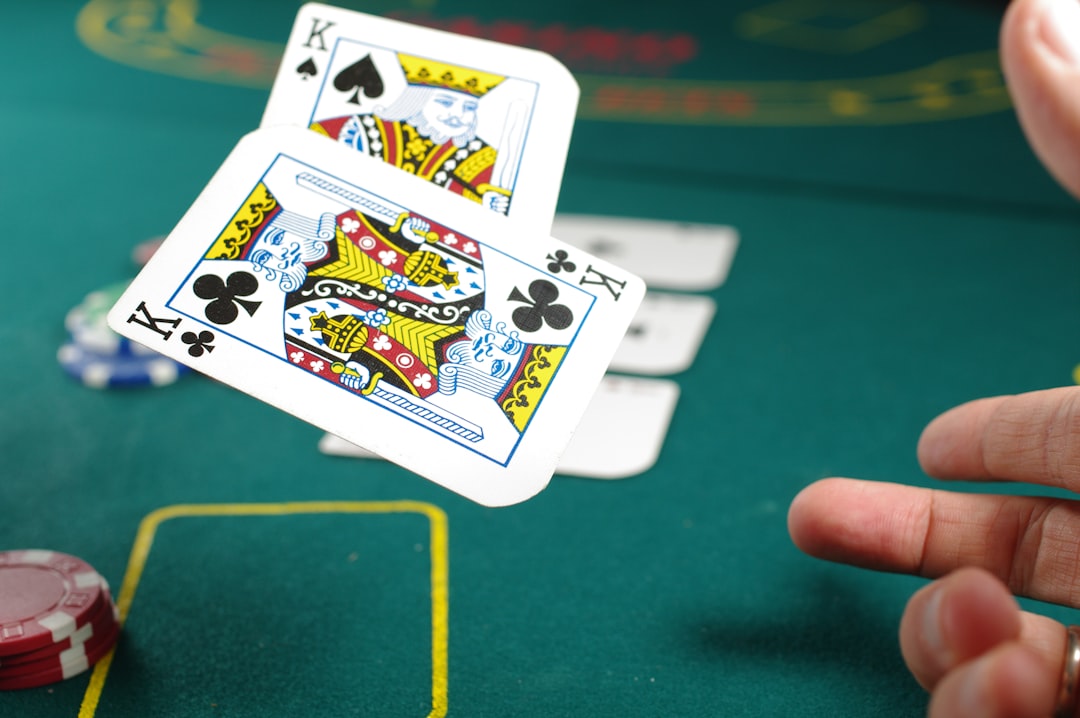
I have enough on the Madsen story and overall WSOP context. Let me search for the Negreanu-Hansen cooler, Phil Ivey, and the Ricky Landais bad beat to round out the analysis.
I have sufficient material. I have all the threads:
- Phil Ivey busts $10K Stud (referenced in Landais context, Ivey appearance in WSOP)
- Negreanu-Hansen cooler in $10K Stud Championship
- Ricky Landais 4-card flop misdeal
- Jeff Madsen's fifth bracelet (20-year anniversary, 11-year drought)
- Naoya Kihara chasing second bracelet in two days (14-year drought)
- Antonio Vargas debut bracelet in US Circuit Championship
- Overall: 17 bracelets in 10 days, 44,381 entries, GGPoker branding, first Mothership stage events, Mini Mystery Millions hit 20,488 entries
Now I'll write the analysis.
The 2026 WSOP's first ten days have produced 17 bracelets, 44,381 entries across 21 events, and a record 20,488-entry Mini Mystery Millions — but the more revealing story is what this week's headlines actually rhyme on: the series has become a stage for legacy reconciliation, GGPoker's deepening commercial footprint, and a rules architecture that occasionally produces outcomes no player can defend. Phil Ivey's quick stud exit, Daniel Negreanu's 20-years-later cooler against Gus Hansen, Jeff Madsen's fifth bracelet on the anniversary of his first, and Ricky Landais's misdeal bust are not unrelated anecdotes — they are dispatches from the same transition.
The week that turned a tournament into a memory palace
If you read this week's WSOP coverage as a sequence of standalone hands, you miss what's actually happening. Three of the highest-engagement stories — Madsen, Negreanu-Hansen, and a parallel
Naoya Kihara, who won Japan's first WSOP bracelet in 2012 and whose second victory came only 14 years later
— are explicitly anniversary stories.
It was 20 years ago when a young Jeff Madsen came to the WSOP to collect his first recorded tournament cash, and he became the youngest player ever to win Player of the Year that summer.
Twenty years after that hand on High Stakes Poker, Daniel Negreanu is still getting coolered by Gus Hansen — this time on Day 1 of the $10,000 Seven Card Stud Championship, where Hansen raked in a pot against Negreanu with a better full house.
This isn't accidental booking. The 2026 series sits at the inflection point where the players who built televised poker's first boom are aging into a nostalgia bracket the WSOP can monetize on YouTube and ESPN. The series runs
May 26 to July 15 at the Horseshoe and Paris Las Vegas with 100 bracelet events on the schedule
, and
notable schedule changes include new WSOP daily livestreams and a delay in the Main Event final table reminiscent of the "November Nine" era
. The economics of those streams reward exactly the kind of generational callbacks W1 produced.
What Madsen's win actually signals about mixed-game value
Madsen's fifth bracelet is the cleanest analytical signal of the week.
With 21 games to choose from, 656 entrants came out for Event #20: $1,500 Dealer's Choice, generating a prize pool of $870,840, with $161,057 to first.
In WSOP bracelet events Madsen has cashed well over 100 times, and while this is his fifth bracelet, it is his first in 11 years.
In doing so, Madsen joined a group of just 27 players who have ever earned five or more bracelets.
The Dealer's Choice is the most adverse selection–resistant format on the schedule. A 656-entry field is large enough to generate variance but small enough that mixed-game specialists hold a structural edge measured in years of study, not hands. Madsen's win is a reminder that buy-in arbitrage in the WSOP catalogue still exists for the right skill profile: a $1,500 buy-in with 21 games versus the average $1,500 hold'em field of two-to-five thousand entries is not the same product, despite the identical sticker price.
Counter-argument: the field is "soft" only relative to specialists.
With 21 games to choose from, the entrants generated a prize pool of $870,840 to be split between the top 99 finishers, with each of the final ten locking up $10,430.
The variance penalty in a deep-running mixed event is brutal for the median player; the expected hourly is mediocre even for strong all-rounders. Madsen's fifth is the survivorship bias of a player who has logged a hundred-plus cashes in this catalogue. For operators that route satellite traffic — GGPoker, WSOP+, ClubGG — the takeaway is that mixed events generate disproportionate content per dollar of prize pool, but disproportionately low entry counts. The product needs subsidies, not better marketing.
The Negreanu-Hansen cooler is a content asset, not a hand
The $10,000 Seven Card Stud Championship would normally draw a single sentence in a daily recap. This week it produced one of the most-shared pieces of WSOP content.
Both players spoke with PokerGO to relive the original moment Negreanu described as "one hand that exemplifies my High Stakes Poker career," while Hansen, who took down a pot worth $575,700, possibly the largest in televised poker history at the time, admitted "in a vacuum, looking at it now, I could have played it a little better."
That 20-year payoff is the most efficient content the WSOP produced all week — built entirely on IP from a 2006 cable broadcast.
Unlike that iconic 2006 encounter, on this occasion Kid Poker had clearly learned his lesson, losing only a small pot instead of going broke after telling the Dane, "Jeez, I'm sorry I didn't raise you!"
This matters commercially because
PokerGO has pulled all of its old WSOP footage after a rights transfer to ESPN, leaving diehard fans with empty playlists
. The archive war is on. Whoever owns the historical footage owns the ability to manufacture these moments in real time. The Negreanu-Hansen replay was made possible by both players still being active and both rights holders still being willing to cross-reference each other. That arrangement is fragile.
Landais and the limits of correct rulings
The Ricky Landais hand is the week's most important governance story, not its most entertaining.
There was a hand on Wednesday at the 2026 WSOP that was out of the ordinary, in Event #11: $10,000 GGMillion$ High Roller No-Limit Hold'em — a GGPoker-branded event — with 22 players remaining out of the original 627, all chasing the $1,089,964 first-place prize.
The mechanics:
Bobby James raised with ace-nine and Landais, short-stacked with about five big blinds, went all-in for his remaining 340,000 chips holding ace-king. The flop came out six-king-five-four — four cards instead of three. After more than one minute of discussion, the tournament supervisor ruled that the dealer must scramble the four cards face down and remove one to be the burn card. When the new three-card flop was put out, it was four-six-five, meaning the king was the burn card and not in play.
Landais would have won the hand had it been dealt correctly. A card had already been burned pre-flop, so none of the four cards should have been the pre-flop burn. The true flop should have been K-5-4, as the 6 was the fourth card the dealer peeled off the deck. The 8 and 7 on the turn and river would not have completed James's straight.
Landais finished in 22nd place for $41,942. James went on to take 12th place for $51,258.
The ruling was correct under
Rule 39 — if the flop arrives with four cards instead of three, the dealer should scramble the four cards face down, then the floor randomly selects one as the next burn card, and the other three are then the flop
.
The old rule was to shuffle all four cards back into the deck. The PokerTDA added the four-card flop rule about 14 years ago.
The procedural defense is intact. The reputational damage is not. The hand became
one of the most viral hands of the summer, involving Bobby James and Ricky Landais, called one of the worst bad beats ever
. James himself noted
"in WSOP Europe I think it would be different. I think the ruling would be different."
A jurisdictional inconsistency that produces a six-figure swing in a million-dollar tournament is a product problem the WSOP will be asked about for years.
The GGPoker branding question lurking under all of it
Three of this week's six headline events ran under explicit GGPoker branding or sponsorship adjacency.
Naseem Salem won his first WSOP bracelet and $1,089,964, beating Alexis Cruz Martinez heads-up from a 627-entry field and a $5,831,100 prize pool in the first GGPoker-branded bracelet event in Las Vegas.
Landais's misdeal occurred in that same event. Negreanu, a GGPoker ambassador, anchors the daily vlog cycle. The Kihara comeback —
"Naoya Kihara Comes Back From Single Chip to End 14-Year WSOP Drought"
— circulated through the same channels.
Counter-view: this is normal sponsorship maturation, not capture. The WSOP brand is bigger than any single operator. CoinPoker's Bobby James was on the other side of the Landais hand; PokerStars, 888poker, and ClubGG all maintain satellite pipelines. The schedule is still 100 events long with diverse buy-ins. But the optics of the GGMillion$ event producing the week's worst rules controversy, immediately after being labeled the
"first GGPoker-branded WSOP champion in Las Vegas"
, hands competitors a free quarter of talking points.
Antonio Vargas and the underrated Circuit Championship pivot
Lost in the celebrity stories:
Event #16, the $1,700 U.S. Circuit Championship — the first Circuit Championship to award a bracelet — drew 2,148 entries and a $3,231,666 prize pool.
Antonio Vargas, coached by Faraz Jaka ahead of the U.S. Circuit Championship final table, entered heads-up play against Kai Cohen with a 3-to-1 chip advantage
and won his debut bracelet for
$439,605
.
Making the Circuit Championship a bracelet event is the single most consequential structural change of the 2026 series for the median grinder. It converts a year of regional grinding into a path to the most-coveted prize in poker, and it expands the bracelet supply without diluting the Main Event. The 2,148-entry field at a $1,700 buy-in is the kind of mid-market success the WSOP needs to defend against the GGPoker-branded high rollers above it and the Mini Mystery Millions below it.
The 57th WSOP opened on May 26 with the $550 Mini Mystery Millions, which built across six starting flights to a record 20,488 entries, the seventh-largest live event in WSOP history.
The barbell is now visible: $550 mass-market entries on one end, six- and seven-figure high rollers on the other, and the Circuit Championship anchoring a middle that had been hollowing out.
The counter-argument
The strongest case against reading this week as a structural moment: every one of these storylines has happened before. Coolers between legends, fifth bracelets after long droughts, dealer errors, ambassador wins — the WSOP has produced a version of each every summer since the modern era began.
"Naoya Kihara Comes Back From Single Chip to End 14-Year WSOP Drought"
and
"Heads-Up Cooler Hands Naseem Salem WSOP Bracelet in GGMillion$ High Roller"
read like 2018 headlines with the names changed.
There is also a credibility problem with the "GGPoker takeover" narrative. The operator's branding is real, but Bobby James is a CoinPoker ambassador, the field at the $10K Stud Championship features players from every commercial stable, and
Madsen's victory speech — "Life isn't just about bracelets, but it's nice for this stuff to happen and things telling you you're doing the right thing. I ran really well at the final table, I was super locked in" — is the kind of unsponsored authenticity that any commercial layer struggles to manufacture
. The series remains, fundamentally, a player-driven product.
And the Landais ruling, however ugly, was correct. A correct ruling that produces a sympathetic loser is the signature of a functioning rules regime, not a broken one. The alternative — discretionary rulings that produce "fair" outcomes — is how integrity erodes in every other gambling vertical.
Both critiques are real. But the volume and content type W1 produced is itself the evidence: when the dominant storylines available are anniversaries, controversies, and ambassador moments rather than fresh competitive narratives, the product has matured into something that monetizes its archive as aggressively as its present.
What I'm watching
The $25,000 High Roller final.
There are 22 players left in Event #19: $25,000 High Roller No-Limit Hold'em, all eyeing the $1,773,083 top prize, with Barak Wisbrod leading the field at 5,000,000, followed by Zachary Grech (4,100,000) and Joey Weissman (3,300,000).
A non-ambassador winner reframes the GGPoker narrative immediately.
Madsen's POY run.
With his face already on a banner in the Horseshoe holding his first WSOP bracelet, Madsen opened up about his drive to chase another POY title 20 years after the first. He's got the win, an eleventh in the $5k PLO, and another cash.
The POY race is the cleanest signal of who actually played the best summer;
first to third receive a $100,000 WSOP Paradise package, and fourth to fifteenth receive a $30,000 package
, so the financial stakes extend well beyond the title.
Whether the Landais ruling produces a TDA review. The hand will be discussed at the next Poker Tournament Directors Association meeting; whether the four-card flop rule is amended will signal whether viral pressure can move governance.
The Main Event delay. The November Nine–style break is back, with
ESPN covering the Main Event final table live from August 3 to 5
. The 20-day gap is a content gamble; if engagement holds through the break, expect other major tours to copy.
GGPoker's bracelet branding count. Track how many of the remaining 83 events carry explicit GGPoker labeling. The line between "title sponsor" and "co-brand" is where the next structural argument will be fought, and it has direct implications for satellite routing, ambassador economics, and the comparative value of competing operator stables.
The series is still in single digits of its 100-event run. The first week's signal is clear: the WSOP has stopped being primarily a tournament and started being primarily a content platform that happens to award bracelets. That isn't a value judgment — it's a structural read. The economics that follow will reward operators, players, and rights holders who understand which product they're actually in.
The data
Source: VIP-Grinders WSOP 2026 Results Tracker, updated June 5, 2026
Source: PokerNews, VIP-Grinders, World Poker Deals — WSOP 2026 results, June 5-6, 2026
About the author
WeeBet's editorial desk: daily news, weekly analysis, and operator reviews across prediction markets, crypto gambling, sweepstakes, and DFS. Bylined collectively for cross-vertical perspective.
Related analyses
WeeBet Weekly
The week's biggest market move, in 4 minutes.
Every Friday: the top Polymarket and Kalshi price shift, one regulatory story that actually matters, and one chart. No fluff, no promo. Free.
Free. Unsubscribe in one click. We'll never sell your email.